
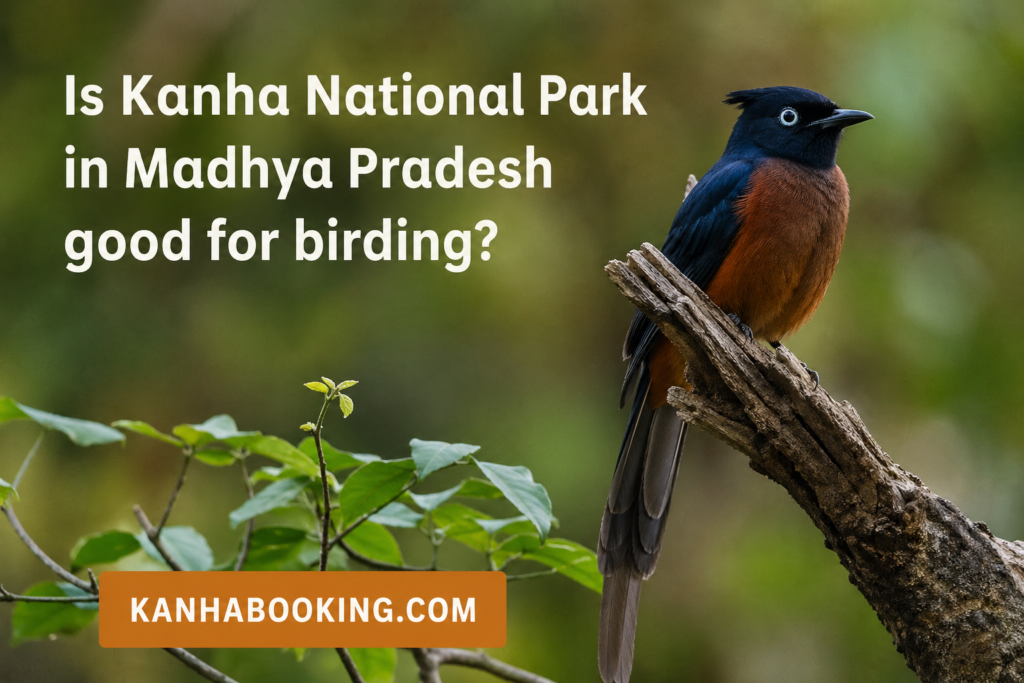
When people think of Kanha National Park, the first thing that comes to mind is the Royal Bengal Tiger. But ask any serious birdwatcher and they will tell you a different story. Kanha is quietly one of the best birding destinations in central India, and it does not get nearly enough attention for it.
So is Kanha National Park in Madhya Pradesh good for birding? The short answer is yes, absolutely. Here’s everything you should know before planning your birdwatching trip to Kanha National Park.
How Many Bird Species Are Found in Kanha National Park?
Kanha National Park is home to more than 300 bird species. Select 89 more words to run Humanizer. Some records suggest the number goes even higher when the buffer zone is included. The reserve is extremely rich in avifauna with almost 325 species of birds, including water birds like storks, teals, pintails, herons, and egrets, as well as ground birds like peafowl, jungle fowl, partridge, and quail.
Kanha is one of the largest and best protected areas in central India, with well preserved forests, making the bird life rich and varied. It has most of the representative species of the Indo-Malayan Tropical Dry Zone.
For a fortnight’s visit, you can realistically expect to spot over 100 species without too much effort.
Why Is Kanha a Good Place for Birdwatching?
The habitat variety inside Kanha is what makes it so rewarding for birders. Kanha National Park has open grasslands and meadows, areas with dense forests, many water bodies and lakes, a network of running streams and nalas, and undergrowth vegetation creating an environment viable to support and nurture a variety of birds.
This mix of Sal forest, bamboo groves, open meadows, and wetland patches means you will encounter completely different bird communities within the same safari. Dense canopy birds, grassland species, waterbirds, and raptors all share the same landscape.
Thick sal forests offer a safe habitat for shy birds like the White-rumped Shama and Asian Paradise Flycatcher, whose sweet calls fill the forest air.
Best Time for Birding in Kanha National Park
The ideal season for birdwatching in Kanha National Park is usually from November to March. During these cooler months, the resident birds are most active, and migratory species from the Himalayas and beyond arrive, adding to the avian diversity. Early mornings and late afternoons are prime birding times, as the light is ideal for spotting birds and temperatures are comfortable.
April is also a strong month for birdwatching. The month of April is very good to see local birds as Mahua and many other local plants are in full bloom. The summer months before the park closes in July are great because vegetation thins out, making birds easier to spot.
The park is open from October 15 to June 30, so you have a wide window to plan your birding visit to Kanha.
Top Birds You Can Spot in Kanha National Park
Here are some of the most exciting birds that birdwatchers regularly spot inside Kanha Tiger Reserve:
Indian Paradise Flycatcher: This is the state bird of Madhya Pradesh and one of the most beautiful birds you will find in Kanha. The male has a long white tail that streams behind it as it flies through the forest. Its melodious calls echo through the dense Sal trees.
Indian Roller: Known for its electric blue wings, the Indian Roller is commonly found in open grassland and light forest areas of Kanha National Park. It is hard to miss during a gypsy safari.
Green Bee-eater: The Green Bee-eater is one of the most acrobatic fliers among the birds of Kanha, catching insects in flight and typically seen in small groups perched high up on bare branches.
Malabar Pied Hornbill and Grey Hornbill: Both are commonly seen in Kanha. The hornbill has mainly black plumage with a white belly and a yellow bill with a large black casque.
Crested Serpent Eagle: One of the most impressive raptors you can see soaring above the forest canopy during morning safaris.
Other frequently spotted birds include the Racket-tailed Drongo, Red- and Yellow-wattled Lapwing, Grey Hornbill, Golden-backed Woodpecker, Black Ibis, White-necked Stork, and cormorants, especially near water during winter.
Raptors like the Crested Serpent Eagle, Hawk Eagle, Honey Buzzard, Black-Winged Kite, Shikra, Laggar Falcon, and Shaheen Falcon are also seen in the park.
Greater Coucal and Jungle Owlet: The Jungle Owlet is the most common owl in Kanha, heavily barred with brown and known for its piercing yellow eyes. Although mainly active at dawn and dusk, it can sometimes be spotted during the day.
Lesser Florican and Lesser Adjutant Stork: Globally threatened species including the Lesser Adjutant Stork and Lesser Floricans can be seen in season.
Also Read: Top Bird Species Found in Kanha Tiger Reserve
Best Zones for Birdwatching in Kanha
While every zone of Kanha offers good birding, the buffer zone is particularly rewarding. Venturing into the buffer areas can significantly enhance your birding experience. These areas, with their mosaic of forests, grasslands, and scrubland, provide vital habitat for a wider range of birds.
Within the core zones, the Kisli Zone near Khatia Gate and the Sarhi Zone are considered excellent for birdwatching with fewer crowds. The Sarhi Zone is a quieter option that gives you more time to pause, listen, and spot birds without the rush of larger safari groups.
Walking safaris inside the buffer zone are especially good for birding. Birdwatching is best enjoyed on a guided walking safari along designated nature trails. Many birding enthusiasts have made this a birding hotspot in recent times. You can easily hire experienced bird naturalists from lodges.
Tips for Birdwatching in Kanha National Park
Carry a good pair of binoculars. This is non-negotiable for birding inside a dense forest.
Bring a field guide. A bird guide book specific to Indian birds will help you identify species on the spot.
Hire a local bird guide or naturalist. Hiring an experienced bird guide can significantly improve your birding success in Kanha. Local guides are familiar with bird calls, nesting spots, and seasonal movements.
Start early. The first two hours after sunrise are when birds are most active and vocal. Plan your morning safari with birdwatching in mind.
Be patient and quiet. Birdwatching rewards calm, observant visitors. Let the forest come to you.
Plan your trip without last-minute stress, secure your kanha safari booking in advance and choose the best zones for birdwatching and wildlife.
Frequently Asked Questions About Birding in Kanha National Park
Kanha is home to over 300 species of birds, with some records indicating 325+ species including the buffer zone.
November to March is the best time for birding at Kanha. Early mornings between October and June are also excellent for spotting resident birds.
The buffer zone and the Sarhi Zone are considered excellent for birding. Walking safaris in the buffer zone offer the best variety of species.
Yes. During winter months, migratory birds from the Himalayas and other regions arrive in Kanha, adding significantly to the total number of bird species you can spot.
Yes. With a large number of easily visible and colorful birds like the Indian Roller, Green Bee-eater, and Indian Paradise Flycatcher, Kanha is great for both beginners and experienced birders.
Summer months, especially April and May, are good for spotting resident birds like Indian Roller, Golden Oriole, Hornbills, and various woodpeckers as the forest canopy thins out.
Final Thoughts
Kanha National Park in Madhya Pradesh is far more than a tiger reserve. It is a genuine birdwatcher’s paradise with over 300 species, varied habitats, and experiences ranging from quiet buffer zone walks to open meadow safaris. Whether you are a casual visitor hoping to spot colorful birds alongside tigers or a dedicated birder planning a focused trip, Kanha will not disappoint.
Plan your visit between November and March for the best birding experience, hire a local naturalist, and explore the buffer zone on foot. You will come back with a life list full of species you never expected to see in one place.