
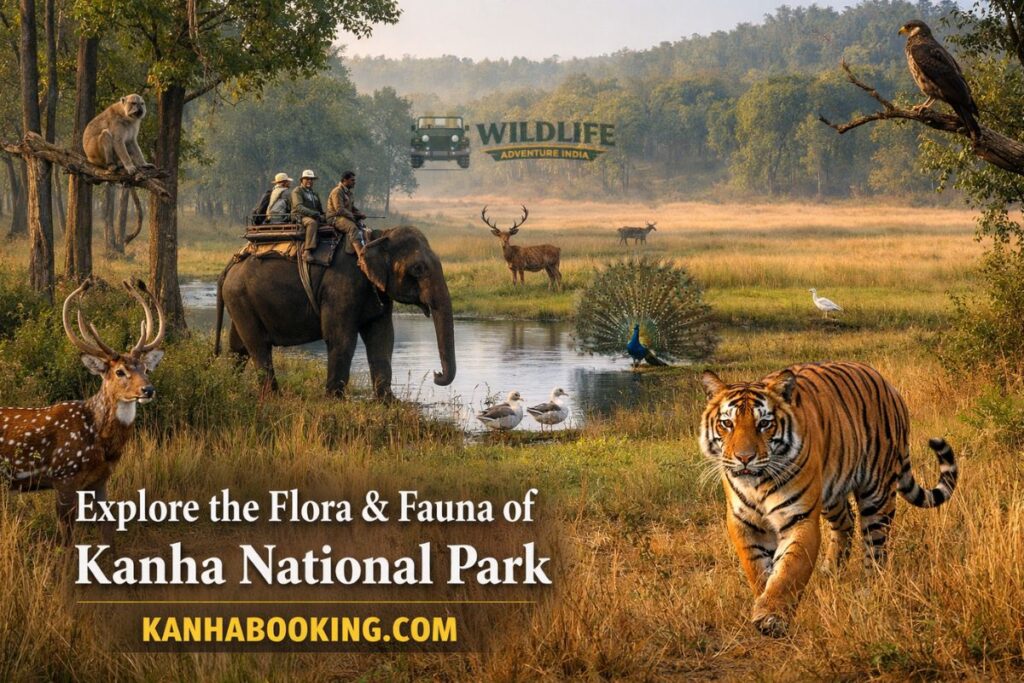
The park Kanha is situated in the locations of bundle greenery, one of India’s most renowned wildlife areas. Among its larger areas of captivating sal forests, boundlessly vast grasslands, and cauline calmly flowing river valleys, the benchmark of a biodiversity miracle is declared.
The reference to Kanha flora and fauna means a complex, living ecosystem that constitutes the very heart of the wilds of central India.
The Kanha National Park wildlife is a potpourri of diversity incomparable, whether it be Tigrean Bengal with royal bearings, hardly recognized and limited ground barasingha, tall invoiced sal trees, or multi-hued bird life. This comprehensive book unveils the landscape, vegetation, fauna, conservation policies, and ecological significance of this extra-ordinary park.
Introduction to Kanha National Park
Established in 1955 and later declared a Tiger Reserve under Project Tiger in 1973, Kanha National Park covers approximately 940 square kilometers, with a larger buffer zone extending beyond. The park is divided into core and buffer areas, ensuring both wildlife protection and regulated tourism.
Often regarded as the inspiration behind Rudyard Kipling’s The Jungle Book, Kanha offers an immersive jungle experience filled with natural beauty and ecological richness.
The Landscape: A Mosaic of Ecosystems
The first thing that strikes visitors is the park’s diverse terrain. Kanha’s landscape is not a uniform forest; instead, it is a mosaic of:
- Dense sal forests
- Bamboo thickets
- Open grasslands (locally known as “maidans”)
- Seasonal streams and rivers
- Low-lying hills and plateaus
The diverse landscape of Kanha National Park determines its plant and animal diversity. The different habitats provide particular plant and animal species which establish a complete ecological system.
The Banjar and Halon rivers function as vital water sources which maintain the survival of both herbivorous and carnivorous animals during the dry season. The water sources in Kanha National Park contribute to the creation of multiple distinct wildlife habitats.
The Rich Flora of Kanha National Park
The vegetation of Kanha falls under the category of tropical moist deciduous forest. The flora here is not only beautiful but ecologically significant.
1. Sal Forests: The Green Backbone
Sal (Shorea robusta) trees dominate the forest canopy. These tall, sturdy trees create dense shade and provide shelter to many species. Their leaves enrich the soil when they decompose, maintaining forest fertility.
Sal forests are critical to maintaining the microclimate and form the foundation of Kanha flora and fauna ecosystem balance.
2. Bamboo Groves
Bamboo grows abundantly in Kanha and serves as both food and shelter. Predators often use bamboo thickets for cover while stalking prey. Smaller mammals and birds also nest within these dense patches.
3. Expansive Grasslands
Kanha’s meadows are among its most distinctive features. These grasslands were once village settlements relocated for conservation purposes. Today, they are prime grazing grounds for herbivores like barasingha and chital.
The open meadows make Kanha one of the best locations for hard ground barasingha conservation in Kanha National Park.
4. Medicinal and Indigenous Plants
The forest also contains several medicinal herbs traditionally used by the Gond and Baiga tribes. This connection between forest and community adds cultural significance to Kanha flora and fauna biodiversity conservation efforts.
The Diverse Fauna of Kanha National Park
Kanha is globally recognized for its thriving wildlife population. The park supports a rich variety of mammals, birds, reptiles, and insects.
The Royal Bengal Tiger
The crown jewel of Kanha National Park wildlife is the Royal Bengal Tiger. Kanha is one of the best-managed tiger reserves in India, offering strong chances of tiger sightings during jeep safaris.
The park’s effective habitat management and anti-poaching strategies have strengthened tiger populations, making it a model for successful tiger conservation in central India national parks.
The Hard Ground Barasingha
Perhaps Kanha’s greatest conservation success story is the revival of the hard ground barasingha. Once on the brink of extinction, this rare swamp deer now thrives in Kanha’s grasslands.
Kanha remains the only place in the world where this species exists in its natural habitat, making it a critical destination for those interested in rare deer species conservation in India.
Leopards and Wild Dogs
Kanha National Park provides a habitat for leopards and dholes which live there alongside its tiger population. The predators of the ecosystem maintain balance because they control the population numbers of herbivores. In Kanha National Park, wildlife enthusiasts and photographers can observe leopards and dholes which represent the park’s diverse carnivorous species that help preserve its forest ecosystems.
Herbivore Species
Kanha hosts an impressive range of herbivores, including:
- Spotted deer (chital)
- Sambar deer
- Barking deer
- Gaur (Indian bison)
- Nilgai
- Wild boar
The herbivorous animals establish the fundamental prey foundation which enables predators like tigers and leopards to hunt in Kanha National Park. The species fulfill an essential function by controlling forest plant growth and facilitating seed distribution while they maintain the natural stability of the ecosystem. People who study wildlife and take photographs can see how herbivores interact with Kanha’s diverse animal species through their observation of these animals.
Sloth Bears and Smaller Mammals
Sloth bears, jackals, jungle cats, and langurs add to the diverse mammalian population of Kanha National Park. Though less visible than tigers, these smaller mammals play a vital role in maintaining ecosystem health by aiding seed dispersal, controlling insect populations, and balancing the forest food chain. Observing these elusive creatures offers wildlife enthusiasts and photographers unique experiences beyond the big cats. Kanha’s rich habitats provide ideal opportunities for eco-tourism and wildlife spotting, making it a prime destination in central India for nature lovers seeking to explore both common and rare mammalian species in their natural environment.
Birdlife: A Paradise for Birdwatchers
Kanha is home to more than 300 bird species, making it an exceptional destination for birdwatching in the lush forests of Kanha National Park. Some notable species include:
- Crested serpent eagle
- Indian roller
- Scarlet minivet
- Green bee-eater
- Malabar pied hornbill
During the winter months, the park attracts numerous migratory birds, further enriching its already impressive avian diversity. This vibrant mix of resident and seasonal birds provides birdwatchers and wildlife photographers with incredible opportunities to observe unique behaviors, capture stunning plumage, and experience the dynamic ecosystems of central India’s protected forest habitats.
Reptiles, Insects, and Ecological Indicators
Reptiles such as pythons, cobras, and monitor lizards inhabit the dense forests and grasslands of Kanha National Park, playing a key role in controlling rodent populations. Butterflies, bees, and other insects contribute to pollination, decomposition, and nutrient recycling, maintaining soil health and plant diversity. These often-overlooked creatures are essential ecological indicators, reflecting the overall health and balance of Kanha’s flora and fauna ecosystem, and supporting long-term biodiversity conservation in central India’s protected wildlife habitats.
If you’re fascinated by India’s rich wildlife, don’t miss our detailed guide on the flora and fauna of Pench National Park for more breathtaking safari insights and wildlife adventures!
Seasonal Transformation of Kanha
Each season in Kanha National Park offers a distinct and unique experience for wildlife enthusiasts, photographers, and nature lovers:
- Winter (October–February): Pleasant weather, cooler temperatures, and lush greenery make this season ideal for safaris, birdwatching, and wildlife photography. Migratory birds arrive, enriching avian diversity, while herbivores and predators are easier to spot near water sources.
- Summer (March–June): Rising temperatures and water scarcity increase animal movement around rivers and watering holes, improving tiger and predator sighting chances. Dry grasslands reveal tracks and signs of wildlife, offering a closer look at Kanha’s rich biodiversity.
- Monsoon (July–September): The park remains closed to allow forests to regenerate naturally. Heavy rainfall rejuvenates rivers, wetlands, and vegetation, supporting new growth and sustaining herbivore populations for the coming seasons.
Seasonal variation in Kanha significantly influences wildlife behavior, predator-prey interactions, and vegetation growth patterns, making each visit unique. This makes Kanha National Park a year-round destination for eco-tourism, wildlife spotting, and nature-based travel in central India.
Conservation and Management Efforts
Kanha National Park is not only a wildlife paradise but also a global example of effective conservation and ecological management. Its strategies ensure the protection of endangered species and the long-term health of Kanha flora and fauna and Kanha National Park wildlife.
Kanha’s conservation strategy includes:
Village relocation from core zones – Ensuring minimal human disturbance in critical wildlife habitats.
Grassland management programs – Maintaining the open meadows essential for herbivores like barasingha and chital.
Scientific wildlife monitoring – Using camera traps, surveys, and GPS tracking to study population dynamics and behavior.
Anti-poaching patrol units – Protecting tigers, barasingha, and other endangered species from illegal hunting.
Habitat improvement initiatives – Restoring water bodies, controlling invasive plants, and promoting natural regeneration of forests.
These efforts ensure long-term sustainability of Kanha National Park wildlife habitat diversity and ecosystem health, supporting a balanced predator-prey system and preserving ecological integrity. The successful revival of the barasingha remains one of India’s greatest wildlife conservation achievements, making Kanha a model for community-driven and scientifically managed conservation programs to explore Kanha flora and fauna in India.
Role of Indigenous Communities
The Gond and Baiga tribes maintain a strong bond with the forest. Their traditional knowledge helps to protect the forest while educating people about conservation methods.
The application of tribal knowledge to management systems improves wildlife conservation efforts in communities near Kanha National Park which helps maintain ecological balance and safeguard native species and ensures environmental protection for future generations. The people of Kanha region use their traditional methods which include medicinal plant extraction and rotational grazing and seasonal resource control to maintain their natural habitats that serve as a model for community-driven conservation and sustainable management of Kanha wildlife and plant life in central India.
Eco-Tourism and Safari Experience
The main method for exploring Kanha National Park involves Jeep safaris. The trained naturalists lead visitors to observe animal behavior and study plant species and ecosystem dynamics.
Sustainable tourism practices create minimal ecological impact which enables visitors to discover Kanha’s wildlife through responsible wildlife tourism. Conservation efforts receive support through strict entry regulations and designated safari zones and eco-friendly accommodations and visitor education programs which enhance the wilderness experience. The combination of specialized guided safaris with nature trails and birdwatching tours provides visitors to Kanha National Park the chance to experience its wildlife which has established the park as one of India’s premier wildlife safari destinations. observing Kanha’s wildlife.
Why Kanha is a Must-Visit Wildlife Destination
Kanha National Park is one of India’s most remarkable wildlife destinations, attracting nature lovers, photographers, and conservation enthusiasts from across the world. Its unique combination of dense forests, open meadows, and water bodies supports a diverse ecosystem, making it a living laboratory for studying Kanha flora and fauna and Kanha National Park wildlife.
The park’s rich biodiversity, rare species like the hard ground barasingha, and thriving tiger population make it ideal for eco-tourists and researchers seeking the best wildlife safari experiences in India to explore Kanha flora and fauna up close.
Kanha stands out due to:
Exceptional biodiversity – The park hosts a wide variety of mammals, birds, reptiles, and plant species, creating a rich and balanced ecosystem that supports predator-prey dynamics.
Rare barasingha population – Kanha is the only place in the world where the hard ground barasingha thrives, showcasing one of India’s most successful conservation efforts.
Healthy tiger numbers – The park’s strong tiger population makes it one of the best locations for tiger sightings and wildlife photography in India.
Well-maintained grasslands – The open meadows provide essential grazing grounds for herbivores like deer and support the overall ecological balance of the park.
Structured eco-tourism model – Guided safaris, educational programs, eco-friendly accommodations, and regulated visitor access ensure that tourism supports conservation and ecological sustainability.
It offers one of the most immersive experiences for those interested in exploring Kanha flora and fauna in central India wildlife reserves, combining adventure, education, and conservation in a way few other parks can match.
Book your Kanha wildlife adventure with easy Kanha National Park safari booking and increase your chances of spotting tigers, barasingha, and other iconic species.
Frequently Asked Questions (FAQs)
Kanha is famous for its thriving tiger population and the successful conservation of the hard ground barasingha.
Visitors can see tigers, leopards, barasingha, gaur, sloth bears, wild dogs, and over 300 bird species.
Tropical moist deciduous forests dominated by sal trees and bamboo groves characterize the park.
Summer is best for tiger sightings, while winter is ideal for birdwatching and comfortable safaris.
Yes, the diverse landscapes and abundant wildlife make it one of India’s top destinations for wildlife photography.
Conclusion
Exploring Kanha flora and fauna is more than just a wildlife tour—it is an educational, inspiring, and transformative experience. The rich biodiversity, structured conservation strategies, thriving predator-prey relationships, and vibrant landscapes make Kanha one of India’s most treasured and ecologically significant natural reserves.
The extraordinary diversity of Kanha National Park wildlife, combined with its conservation success stories, positions it as a global model for sustainable wildlife management. Whether you are a nature enthusiast, researcher, photographer, eco-tourist, or traveler, Kanha promises a deep, immersive, and unforgettable connection with the wild and its pristine ecosystems.