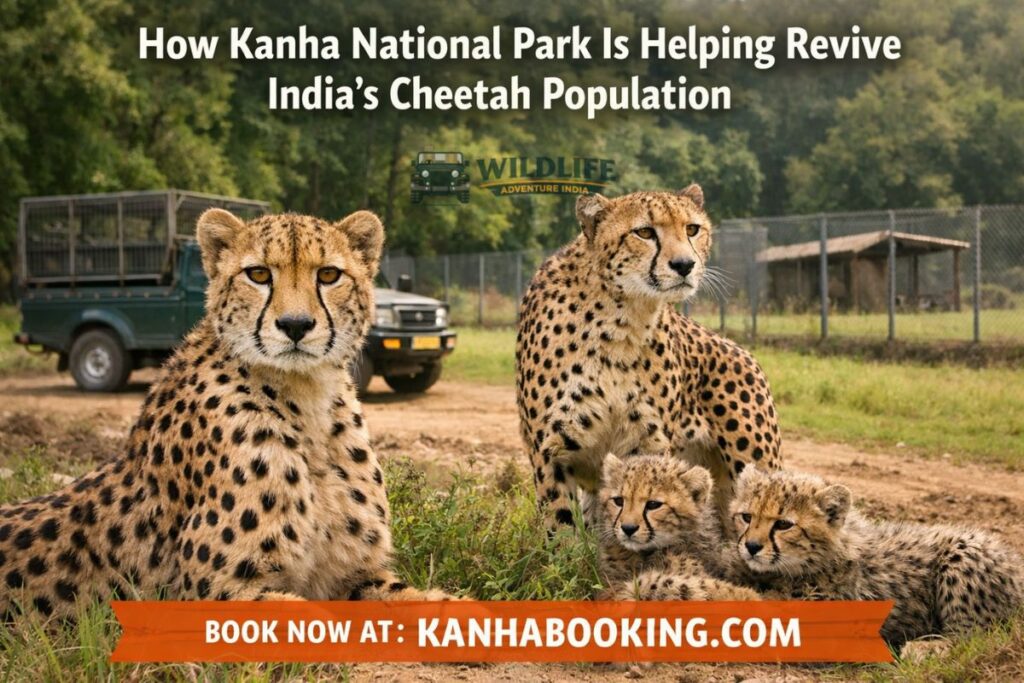
India is writing a new chapter in wildlife conservation by bringing back one of its most iconic lost species — the cheetah. These cheetahs are coming from Botswana and are being released into Kuno National Park in Madhya Pradesh. The extinction of cheetahs in 1952 marked a sad moment in Indian wildlife history. But today, through Project Cheetah, the country is working hard to restore this magnificent predator. While the main reintroduction site is Kuno National Park, the role of Kanha National Park in strengthening ecosystems, prey base, and conservation systems is extremely important.
Let’s explore how Kanha National Park is helping revive India’s cheetah population. This is not just important for Kuno National Park. It is also important for nearby parks like Kanha National Park, which is playing a very important role in making this project successful.
Understanding the Cheetah’s Disappearance from India
Before understanding how Kanha National Park helps, we need to know why cheetahs disappeared from India. Too much hunting by kings and British officers, along with loss of grasslands and fewer animals to hunt, caused them to disappear.The last confirmed cheetahs in India were seen in the mid-20th century.
Cheetahs need open grasslands and plenty of prey like deer and antelope. Over time, these habitats declined. Today, India is trying to restore those habitats, and strong ecosystems like Kanha National Park provide a model of how wildlife habitats should be protected and managed.
What Is Project Cheetah?
Project Cheetah is a big wildlife program in India that started in 2022. As part of this project, cheetahs were brought from Namibia and South Africa and released in Kuno National Park.
Even though cheetahs were not released directly in Kanha National Park, Kanha helped support the project. A healthy park like Kanha makes it easier to expand cheetah populations to other areas in the future.
The main goals of Project Cheetah are:
- Restore grasslands
- Increase the number of different animals and plants (biodiversity)
- Promote eco-tourism
- Show India’s leadership in wildlife conservation
Why Was Kuno National Park Chosen for Cheetahs?
The government carefully selected Kuno National Park for the cheetah reintroduction. There are several reasons for this choice.
First, the environment in Kuno is similar to African grasslands where cheetahs naturally live. It has open spaces and grasslands where cheetahs can run fast and hunt easily. Cheetahs need large open areas to mark their territory and survive.
Second, Kuno has many herbivores (plant-eating animals) like deer, antelope, and wild boar. These animals are food for cheetahs. Having enough prey is very important for cheetahs to live comfortably in their new home.
Another important reason is that Kuno is located near Kanha National Park, one of India’s most successful wildlife reserves. Kanha has a long history of protecting endangered species. Because of this experience, Kanha can guide and support Kuno in managing the cheetahs properly.
How Kanha National Park Is Helping by Providing Prey
One of the biggest challenges in bringing cheetahs to India is making sure they have enough food. Cheetahs mainly eat spotted deer (called cheetal), antelope, and similar animals.
Kanha National Park has a big and healthy population of cheetal (spotted deer). To support the cheetah project, Kanha is sending around 600 to 700 cheetahs to Kuno National Park. This ensures that when cheetahs arrive, they will have enough food to survive.
The cheetal population in Kanha is strong, so moving some of them will not harm Kanha’s ecosystem. This shows how two well-managed parks can work together for conservation.
Because of the strong prey base from Kanha, the chances of success for the cheetah project in Kuno become much higher.
Maintaining Ecological Balance
Kanha National Park is one of India’s top tiger reserves and is part of the bigger Satpura-Maikal region. The park protects forests, meadows, rivers, and wetlands. This balance creates an ideal ecosystem where predators and prey coexist naturally.
By maintaining ecological balance, Kanha National Park contributes to regional biodiversity stability. This indirectly helps cheetah revival because large carnivores need connected landscapes to move safely.
Wildlife corridors connecting Kanha with other protected areas allow gene flow and animal movement, which are essential for long-term cheetah survival.
The Challenge of Tigers Entering Kuno
While bringing cheetahs back is exciting, there are some challenges too.
A tiger from Ranthambore Tiger Reserve has been seen entering Kuno National Park. Tigers are strong predators and may compete with cheetahs for food or territory.
This situation needs careful management.
Luckily, Kanha National Park has experience in handling situations involving large predators like tigers. Over the years, Kanha has developed ways to reduce conflict between animals and manage wildlife peacefully.
Kuno can use Kanha’s knowledge and strategies to make sure cheetahs and other animals can live safely in the same area.
Scientific Monitoring and Research
Modern conservation depends on science. Kanha National Park uses advanced wildlife monitoring systems like:
- Camera traps
- GPS tracking
- Population surveys
- Habitat mapping
These scientific methods help wildlife experts understand animal behavior and ecosystem health. Similar technology is used to track reintroduced cheetahs.
By maintaining high research standards, Kanha National Park helps India’s wildlife research, which is important for making Project Cheetah successful.
Wildlife Relocation Support
As new cheetah habitats are prepared in India, they need sufficient prey animals. Strong parks like Kanha National Park act as donor sites in some wildlife relocation programs.
Relocating herbivores from well-populated parks ensures:
- Balanced prey density
- Faster habitat readiness
- Better survival chances for cheetahs
This indirect support makes Kanha National Park an important contributor to India’s cheetah revival mission.
A Strong Partnership Between Two Parks
The cooperation between Kuno National Park and Kanha National Park shows how teamwork can make conservation successful.
Kanha is helping by:
- Providing prey animals
- Sharing management experience
- Offering scientific knowledge
- Supporting wildlife protection systems
Because of this support, cheetahs have a better chance to survive and grow in India.
Future Possibilities for Kanha National Park
While cheetahs are currently focused in Kuno and other upcoming sites, experts believe that future expansion may include additional protected areas if conditions are suitable.
With its:
- Strong prey base
- Protected grasslands
- Effective management
- Biodiversity richness
Kanha National Park remains a valuable ecological asset in India’s wildlife network. Even if it does not directly host cheetahs, its ecosystem health supports regional conservation goals.
Frequently Asked Questions (FAQs)
No, cheetahs have been reintroduced mainly in Kuno National Park, not in Kanha National Park. However, Kanha supports the larger conservation landscape.
Kanha National Park provides a strong prey base, scientific expertise, and ecosystem connectivity, which indirectly supports cheetah conservation.
Herbivores like chital, sambar, barasingha, and wild boar in Kanha National Park demonstrate how healthy prey populations are maintained for predator survival.
Project Cheetah is India’s program to reintroduce cheetahs into suitable habitats, starting with Kuno National Park.
There is no official confirmation, but strong ecosystems like Kanha National Park could support conservation strategies if required in the future.
The partnership ensures a strong prey base, shared knowledge, and better management practices, increasing the chances of cheetahs thriving in India.
Around 600 to 700 spotted deer were relocated from Kanha National Park to Kuno National Park to provide a healthy prey base for cheetahs.
Conclusion
The revival of India’s cheetah population is a bold and inspiring conservation effort. While Kuno National Park leads the reintroduction, Kanha National Park plays an essential supporting role through strong ecosystem management, prey population stability, scientific research, and community involvement.
By protecting biodiversity and maintaining ecological balance, Kanha National Park strengthens India’s wildlife foundation. The return of the cheetah is not just about one species — it represents India’s commitment to restoring nature and protecting its rich wildlife heritage for future generations.