
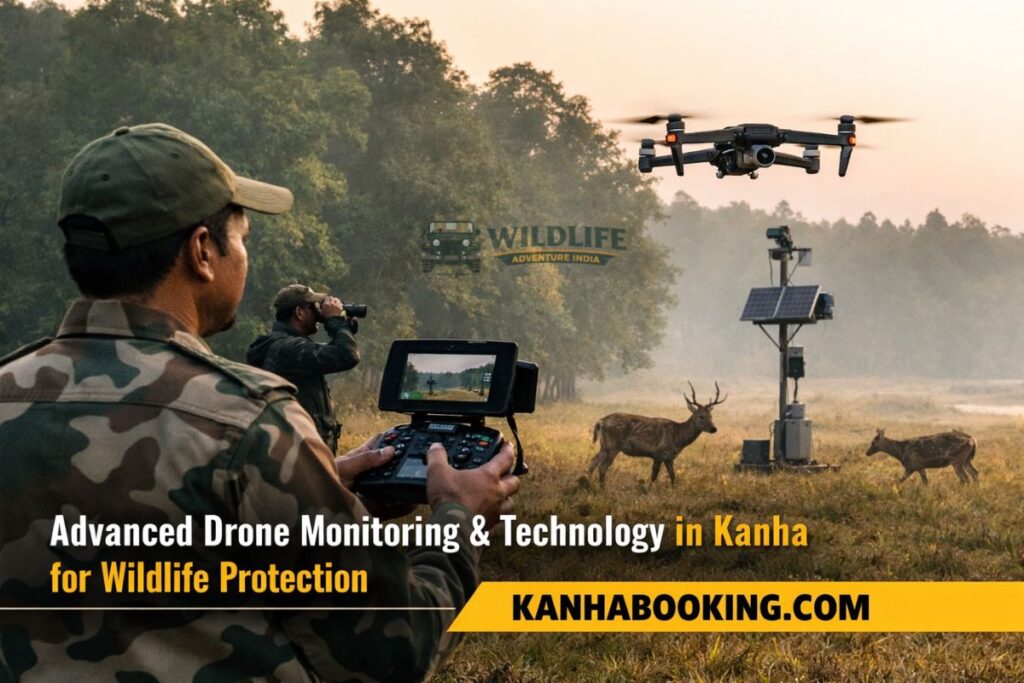
Wildlife conservation in India has changed dramatically over the last decade. Traditional monitoring methods like forest patrols, pugmark tracking, and camera traps are still important, but modern technology is now playing a major role in protecting animals and forests. One of the most powerful innovations in recent years is the use of drones for conservation work. Today, drones for wildlife monitoring have become an essential tool for forest departments across India.
In central India, the forests of Kanha National Park are among the most protected wildlife habitats in the country. This famous tiger reserve is part of the larger kanha forest ecosystem and is known for its healthy population of Bengal tigers, barasingha (swamp deer), leopards, wild dogs, and many other species. Because the park covers a very large area with dense forests, open grasslands, rivers, and hills, monitoring wildlife across the entire landscape can be difficult.
Importance of Technology in Wildlife Conservation
Wildlife reserves like Kanha cover hundreds of square kilometers of dense forest. Monitoring every corner of such a large protected area using only human patrols is extremely difficult. Forest guards often travel long distances on foot, by jeep, or even on elephants to check remote areas of the park.
However, several challenges make traditional monitoring methods limited:
- Dense forest vegetation makes visibility difficult
- Large territories of animals like tigers are hard to track
- Illegal activities may occur in remote forest areas
- Night monitoring is extremely difficult
- Weather and terrain often slow down patrol teams
Because of these challenges, conservation programs have started adopting advanced monitoring systems. Today, drone for wildlife monitoring allows authorities to observe large forest areas quickly and safely from the air.
Drones provide real-time aerial images and videos of the forest landscape. This helps forest officials identify animal movement, monitor forest health, and detect threats much faster than traditional methods. Modern conservation programs combine drones with other technologies like camera traps, satellite imagery, and artificial intelligence to create an integrated wildlife monitoring system.
In the kanha forest, this technology has become particularly valuable because of the park’s large area and rich biodiversity.
What Are Wildlife Drones?
Before understanding their use in conservation, it is important to know what wildlife drones actually are.
Wildlife drones are unmanned aerial vehicles (UAVs) equipped with advanced sensors and cameras designed specifically for environmental monitoring. These drones can fly over forests, grasslands, wetlands, and mountains to capture valuable information about wildlife and habitats.
Most drones used for conservation include the following features:
- High-resolution cameras for aerial photography
- Thermal sensors for detecting animals at night
- GPS navigation systems
- Long flight duration batteries
- Automated flight routes
Some advanced drones are capable of detecting heat signatures from animals, which allows researchers to locate wildlife even in dense forests or during nighttime operations.
Because drones can fly silently at high altitudes, they allow researchers to observe animals without entering their habitat. This makes drone for wildlife monitoring an effective and non-invasive conservation tool.
How Are Drones Used in Wildlife Monitoring?
A common question asked by conservation enthusiasts is how drones are used in wildlife monitoring. Drones serve several important purposes in wildlife research and forest protection.
1. Tracking Wildlife Movement
One of the most important uses of drones is monitoring animal movement across large landscapes. In forests like Kanha, animals travel long distances while searching for food, water, and territory.
Drones help scientists observe:
- Tiger territories and movement patterns
- Herd behavior of deer and gaur
- Migration routes of herbivores
- Predator-prey interactions
- Seasonal changes in animal distribution
By analyzing aerial footage, researchers can study wildlife behavior more accurately. These observations help conservationists protect important habitats and ensure that animals have enough space to survive.
In areas like kanha forest, drone surveys help track species such as tigers, barasingha, and wild dogs without disturbing their natural behavior.
2. Anti-Poaching Surveillance
Poaching remains one of the biggest threats to wildlife conservation. Illegal hunting activities often take place in remote forest areas where monitoring is difficult.
Using wildlife drones, forest officials can monitor suspicious activities from the air. Drones can quickly cover large areas and detect signs of illegal human presence.
Drone surveillance helps detect:
- Unauthorized vehicles entering forest areas
- Human movement in restricted zones
- Illegal hunting camps
- Wildlife traps set by poachers
When suspicious activity is detected, forest authorities can immediately send patrol teams to the location. This rapid response system significantly reduces poaching risks.
Because of their ability to cover large distances quickly, drones are becoming an important tool in modern anti-poaching operations.
3. Monitoring Forest Health and Habitat
Another important use of drones is studying forest ecosystems. Conservation is not only about protecting animals but also about maintaining healthy habitats.
Drone imagery allows scientists to analyze:
- Forest vegetation density
- Grassland growth patterns
- Water availability in forest ponds
- Changes in land use
- Habitat degradation
In the open grasslands of kanha forest, drones help monitor the health of grazing areas that are essential for herbivores like chital and barasingha.
This data helps forest managers decide where to restore grasslands, improve water sources, or protect important breeding habitats.
4. Detecting Forest Fires
Forest fires can cause severe damage to wildlife habitats. Fires destroy vegetation, reduce food sources for animals, and sometimes force wildlife to migrate outside protected areas.
Drones equipped with thermal sensors can detect heat signatures in forests before fires spread widely. This allows forest officials to respond quickly and prevent large-scale damage.
Drone monitoring helps:
- Identify fire hotspots early
- Track the spread of fires
- Guide firefighting teams to exact locations
- Assess damage after the fire
In large reserves like Kanha, early fire detection is critical to protecting wildlife and forest ecosystems.
5. Studying Animal Populations
Researchers also use drones to estimate wildlife populations. Traditional wildlife surveys often require large teams and many days of fieldwork.
Drone surveys provide a faster and safer way to count animals in open landscapes. Aerial images captured by drones help scientists identify different species and estimate their population size.
For example, aerial monitoring can help estimate numbers of:
- Barasingha in grasslands
- Gaur herds in forest clearings
- Deer populations in meadows
- Waterbirds near lakes and wetlands
Such data helps conservation authorities track population trends and implement effective wildlife management strategies.\
Also Read: Top 5 Wildlife Safari Spots in North India: Your Complete Travel Guide
How Drones Impact Wildlife
Another common concern is how drones impact wildlife. When used responsibly, drones have minimal negative effects on animals.
However, certain precautions must be followed to avoid disturbing wildlife:
- Maintaining safe flight altitude
- Avoiding direct flight over animals
- Limiting flight time near nesting sites
- Following wildlife protection guidelines
Most conservation drones operate at heights that do not disturb animals on the ground. Researchers also monitor animal reactions to drone presence and adjust their methods if necessary.
Studies show that when drones are used carefully, they can provide valuable research data without causing stress to wildlife.
Conclusion
The integration of technology, especially drones, has transformed wildlife conservation in India. In large and biodiverse reserves like Kanha National Park, traditional monitoring methods alone are often insufficient due to dense forests, vast landscapes, and elusive species. Drones offer a fast, safe, and non-invasive way to track animal movement, monitor populations, detect poaching, assess forest health, and even identify early signs of forest fires. By combining drones with camera traps, satellite imagery, and AI, forest departments can create an efficient and comprehensive wildlife monitoring system. When used responsibly, drones minimize disturbance to wildlife while maximizing conservation impact, making them an essential tool for protecting India’s rich biodiversity.
FAQ (Frequently Asked Questions)
Wildlife drones are unmanned aerial vehicles (UAVs) equipped with cameras, thermal sensors, GPS, and other advanced technologies to monitor animals and habitats from the air without disturbing them.
Drones allow forest officials to monitor large areas quickly, track wildlife movement, detect illegal activities, study habitats, and respond to forest fires—all in real-time and with minimal human intrusion.
Drones provide aerial footage of forests and grasslands, helping researchers study tiger territories, deer herds, predator-prey interactions, and migration routes without disturbing wildlife.
Yes. Drones can detect unauthorized vehicles, human activity, hunting camps, and wildlife traps in remote areas. This enables rapid response by forest patrol teams, reducing poaching risks.
When used responsibly, drones have minimal impact on animals. Safe flight altitudes, avoiding direct flights over animals, and limiting time near nesting sites help ensure drones remain non-invasive.
Drones capture images and videos that help assess vegetation density, grassland growth, water availability, habitat degradation, and changes in land use, aiding habitat management and restoration efforts.