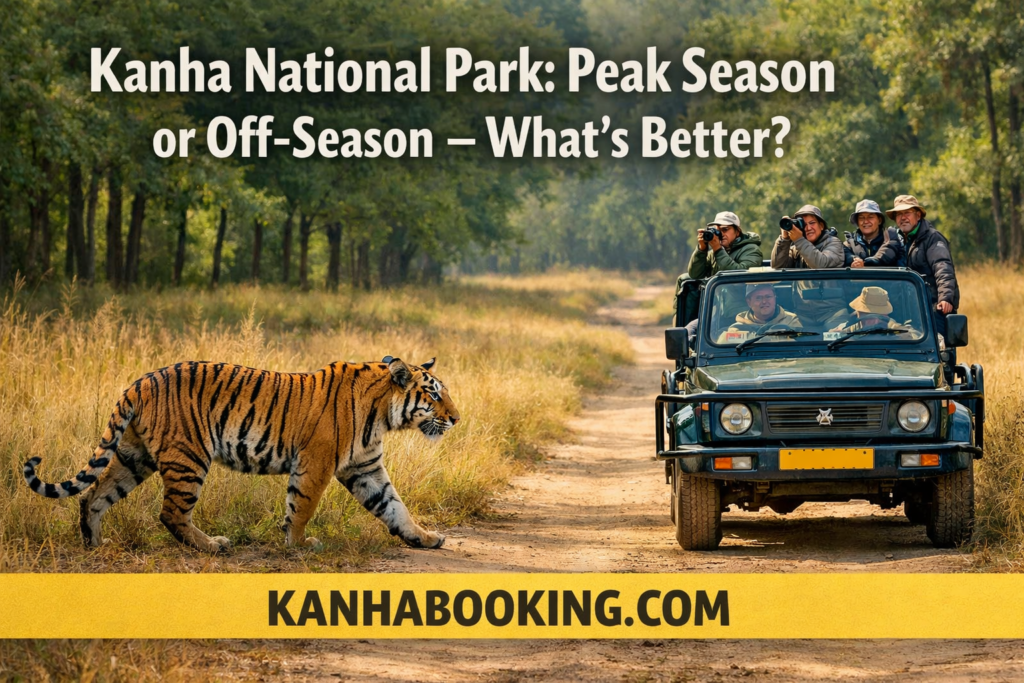
If you are planning a trip to Kanha National Park, one of the first questions that comes to mind is when should I go? Should you visit during the busy peak season when tiger sightings are frequent, or take a chance in the quieter off-season when the jungle feels more raw and personal?
This guide breaks it all down simply so you can plan the perfect Kanha jungle safari without second-guessing your dates.
Understanding the Kanha National Park Season
Before comparing peak and off-season, it is important to know the park’s open and closed periods.
Kanha Tiger Reserve generally operates from October to June. The park closes its core zones during the monsoon months (July to mid-October) for forest management and wildlife protection. During this time, only limited buffer zone safaris may be available.
So the real choice is between:
Peak Season — October to March (Winter)
Summer Safari Season — April to June
Off-Season or Monsoon — July to September (Core zone closed)
Peak Season at Kanha National Park (October to March)
This is the most popular time to visit Kanha, and for very good reason.
Why Peak Season is Great
- Best Weather for Safari: The weather during October to February is cool and pleasant. Temperatures range between 5 to 25 degrees Celsius. Early morning jeep safaris in Kanha feel refreshing, and animals are highly active in the cool air. You will not feel exhausted after a morning drive.
- High Chances of Tiger Sightings: This is arguably the best time for Bengal tiger sightings in Kanha National Park. Tigers are more active and hunt regularly in the open grasslands and meadows. Core zones like Mukki, Kanha, and Kisli offer the highest chances of spotting a Royal Bengal Tiger during morning safaris.
- Excellent Wildlife Photography: Clear skies, golden morning light, and active animals make October to March the top choice for wildlife photography in Kanha. The green landscape post-monsoon in October and November also adds beautiful texture to photos.
- Barasingha Sightings in Open Meadows: The famous hard-ground barasingha or swamp deer graze in Kanha’s open meadows during winter. These rare deer are unique to Kanha and sightings are most common during this period.
- Birdwatching Paradise: With over 300 bird species in the park, October to March attracts serious birdwatchers to Kanha. Migratory birds arrive during this window, making it a dream for bird enthusiasts. Look out for the crested serpent eagle, Indian roller, and the state bird paradise flycatcher.
Downside of Peak Season
Crowd levels are higher, especially on weekends and holidays. Safari permits book up fast so advance booking is essential. Resort and hotel pricing near Kanha tends to be higher. You may share your safari zone with more jeeps.
Tip: Book your Kanha safari online at least 2 to 4 weeks in advance during October to February to avoid last-minute disappointment.
Summer Safari Season at Kanha (April to June)
This period sits between peak and monsoon, and it is actually one of the best-kept secrets for tiger spotting in Kanha.
Why Summer is Underrated
- Highest Tiger Visibility: As temperatures rise between 30 to 42 degrees Celsius, water sources dry up and tigers, leopards, and other animals gather around waterholes. This makes April to June the best time for guaranteed tiger sightings in Kanha. Animals are more visible because dense grass and vegetation thin out.
- Easier Wildlife Spotting Overall: The reduced foliage means you can spot animals that would otherwise remain hidden in thick greenery. Sloth bears, Indian wild dogs or dholes, Indian gaur or bison, sambar, and chital deer are all easier to observe.
- Fewer Crowds Than Winter: While serious wildlife lovers visit in summer, casual tourists avoid the heat. This means quieter safari experiences and better chances of undisturbed animal observation.
Downside of Summer Season
Extreme heat during midday so carry water and sunscreen. Morning and evening safaris are strongly preferred. May not be suitable for families with young children, especially during hot weather.
Off-Season at Kanha (July to September or Monsoon)
Technically, the core zones of Kanha are closed during the monsoon. However, some buffer zones may allow limited safaris.
What Off-Season Offers
Lush, green, and dramatic jungle landscapes perfect for landscape photographers. Very low tourist footfall so you nearly have the jungle to yourself. Cheaper accommodation near Kanha. Nature walks, village tours, and cultural experiences are still available. Great for bird photography as resident birds are nesting.
Limitations of Off-Season
Core zone safari is suspended so tiger sightings are very unlikely. Roads inside the park can be muddy and inaccessible. Leeches and heavy rainfall make outdoor activities challenging. Most jungle resorts near Kanha may have limited operations. Not recommended if your primary goal is a tiger safari in Kanha National Park.
If you are simply looking for a peaceful, budget nature escape and do not specifically need a tiger safari, monsoon can be a unique experience. But most wildlife lovers will find it unsatisfying compared to other seasons.
Peak Season vs Off-Season: Quick Comparison
| Factor | Peak Season (Oct–Mar) | Summer (Apr–Jun) | Off-Season (Jul–Sep) |
| Tiger Sightings | Very Good | Excellent | Very Low |
| Weather | Cool & Pleasant | Hot | Rainy |
| Crowds | High | Moderate | Very Low |
| Permit Availability | Book in Advance | Moderate | Limited |
| Birdwatching | Excellent | Good | Good (Buffer Zone) |
| Photography | Excellent | Good | Landscape Only |
| Budget | Higher | Moderate | Lowest |
| Core Zone Open | Yes | Yes | No |
Which Season Is Actually Better?
Go October to February if you want the best overall experience — great weather, active wildlife, beautiful scenery, and top-quality photography opportunities.
Go April to June if your main goal is spotting a tiger. Water scarcity forces animals into the open and sighting rates are at their peak.
Go July to September only if you love nature landscapes, want a budget trip, or are okay with limited wildlife activity.
For first-time visitors, October to March is the safest and most rewarding time to plan a Kanha jeep safari tour. For experienced wildlife travelers who specifically want tiger sightings, April to June is a strong pick.
Safari Zones to Book Based on Season
- Kanha Zone — Most popular core zone, great year-round from October to June.
- Mukki Zone — Known for tiger and barasingha sightings, best October to April.
- Kisli Zone — Good for general wildlife, accessible from Khatia gate.
- Sarhi Zone — Less crowded, great for a quieter safari experience.
- Buffer Zones like Khatia, Sijhora, and Phen — Available even during monsoon, good for birdwatching.
Frequently Asked Questions
April to June is the best time for tiger sightings as animals gather near waterholes due to heat and dry conditions. October to March is also excellent for an overall wildlife experience.
The core zones of Kanha remain closed during the monsoon season. Limited buffer zone safaris may be allowed but tiger sightings are very rare during this period.
During peak season from October to February, it is recommended to book at least 2 to 4 weeks in advance as permits are limited and get sold out quickly.
Yes, summer safaris are excellent for beginners who specifically want high tiger sighting chances. Plan your safaris for early morning from 6 to 111 AM and late afternoon from 3 to 6 PM to avoid the midday heat.
Yes, some buffer zones like Khatia, Sijhora, and Phen may allow limited safaris during the monsoon months. These are good for birdwatching and nature walks.
Absolutely. Kanha has over 300 bird species. October to March is the best time for birdwatching when migratory birds also arrive in the park.
Final Thoughts
Both peak season and off-season at Kanha have their own charm. But if you are visiting for the first time and want the complete Kanha wildlife safari experience — tigers, barasingha, lush forests, and great weather, plan your trip between October and March.
If you are a hardcore wildlife enthusiast chasing the highest probability of a tiger sighting, April to June will not disappoint.