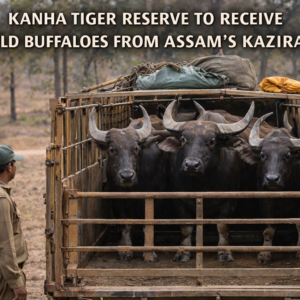

In a significant move for wildlife conservation in Madhya Pradesh, forest authorities successfully carried out two major animal relocations from Kanha Tiger Reserve to strengthen populations in other protected areas. These operations mark a continuation of scientific wildlife management efforts aimed at enhancing ecological balance and expanding viable habitats for key species.
On January 19, 2026, a young tiger — initially rescued as a cub from Pench Tiger Reserve and raised in a re‑wilding enclosure at Kanha’s Mukki region — was safely relocated to Veerangana Durgavati Tiger Reserve (Nauradehi). Approximately 33 to 35 months old, the tiger was declared healthy and fit for independent life after extensive training in natural hunting and roaming behaviour. Equipped with a satellite radio collar and transported under expert supervision, the release into a reserve with lower tiger density aims to help the animal establish its own territory and contribute to population spread across tiger habitats. The relocation was conducted with necessary approvals under the Wildlife (Protection) Act, 1972, and involved a team of veterinarians, wildlife biologists and forest officials.
Read Also: Ranthambore Tiger T-2408’s Relocation: A New Beginning for Mukundra Hills Tiger Reserve
On the same day, forest teams also completed the translocation of 12 Barasingha (hard ground swamp deer) from Kanha to Satpura Tiger Reserve (Narmadapuram district). This group comprising eight adult females and four fawns — was captured using the boma method in the Sarhi Range of Kanha and safely transported in specially designed wildlife vehicles. The operation, overseen by the Field Director of Kanha Tiger Reserve and supported by a dedicated team of conservation experts and veterinarians, aligns with long‑term plans to increase Barasingha numbers across Madhya Pradesh’s tiger reserves. In recent years, Barasingha has also been moved to other protected areas such as Van Vihar National Park and Bandhavgarh Tiger Reserve, furthering efforts to expand their range.
Kanha Tiger Reserve has a long history of successful Barasingha conservation, transforming the species from near‑extinction in the 1970s to a thriving population of over a thousand individuals today. Relocating both tigers and Barasingha supports ecological diversity, ensures genetic flow between populations and contributes to the broader objective of creating resilient wildlife landscapes within central India.
These relocations exemplify Madhya Pradesh’s proactive role in inter‑reserve wildlife management, combining science, planning and on‑ground expertise to safeguard the future of India’s iconic wildlife.