
Introduction
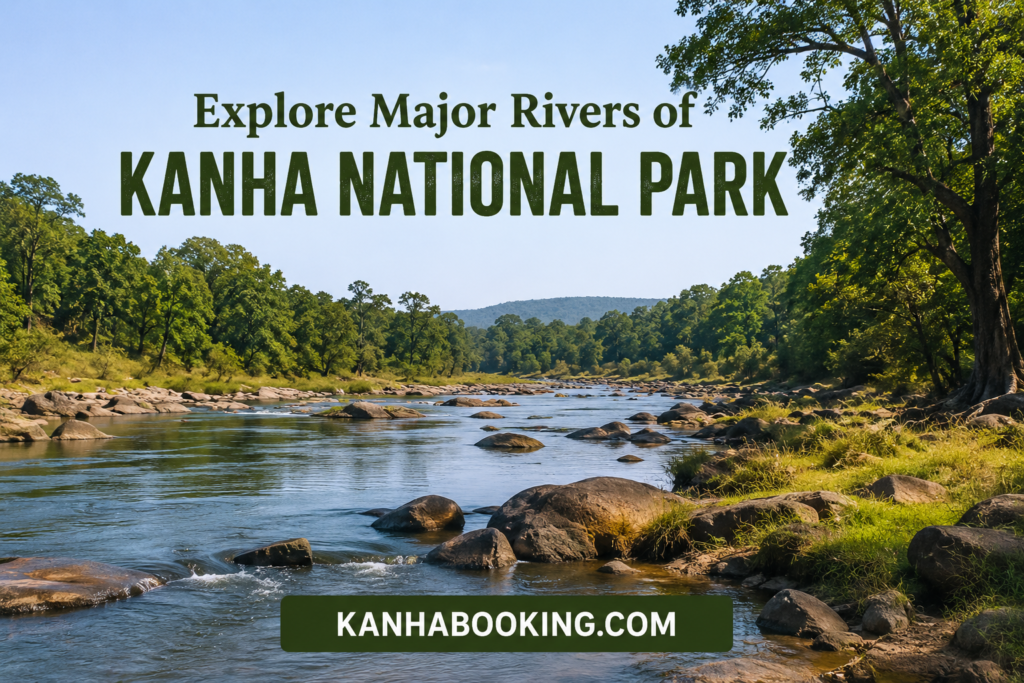
When most people think about Kanha National Park, the first things that come to mind are tigers, barasingha deer, and lush Sal forests. But there is something equally important running through this magnificent jungle — its rivers. The rivers of Kanha National Park are the real backbone of this entire ecosystem. They feed the forests, fill the meadows, attract wildlife, and quietly keep the whole jungle alive through every season.
Kanha Tiger Reserve in Madhya Pradesh sits along two main river valleys,like the Banjar River Valley in the west and the Halon River Valley to the east. There’s also a third river, the Tanneur, less talked about but it does pass through parts of the park, sort of quietly. These water courses together shape the whole landscape and help sustain hundreds of species. So every Kanha safari feels more thrilling than you might even imagine, honestly.
Whether you are planning to book a Kanha safari online or simply want to understand what makes this national park so special, knowing about its rivers will change the way you look at the jungle entirely.
The Banjar River — The Heart of Kanha Tiger Reserve
If you ask any naturalist or forest guide in Kanha which river matters most, they will immediately say the Banjar. The Banjar River is considered the lifeline of Kanha Tiger Reserve, and that title is completely earned.
The Banjar River starts in the Maikal Hills, which are part of the Satpura Range , in Madhya Pradesh, close to the border between Madhya Pradesh and Chhattisgarh. After that it goes on in a sort of south-eastern manner, passing right through the central belt of Kanha National Park , and then sliding toward the western side of the reserve. Later on it finally meets the Narmada River, which is among India’s most sacred and important rivers, near Maharajpur in Mandla district.
What makes the Banjar River so important for Kanha’s wildlife? First, it is a perennial source of water in a region where summer temperatures can reach 45 to 46 degrees Celsius. During the scorching months of April, May, and June, animals converge near the river banks to drink, bathe, and cool down. This is exactly why tiger sightings near the Banjar River are quite common during peak safari season.
The river flows through some of the most important safari zones in Kanha. The Kisli Zone and the Khatia gate area are directly influenced by the Banjar River corridor. Dense Sal forests line its banks, and the nearby grasslands or “maidans” are regularly visited by herds of chital, sambar, gaur, and barasingha.
Mugger crocodiles are also spotted near the Banjar River, quietly resting on sandy banks in the mornings. Bird lovers will especially enjoy watching kingfishers, painted storks, and Indian paradise flycatchers near the river edge.
The Banjar River Valley was historically the first area brought under conservation. It was declared a Wildlife Sanctuary in 1933 and elevated to Kanha National Park status in 1955. Today, the entire area around this river valley forms the western backbone of Kanha Tiger Reserve.
One interesting tributary of the Banjar River worth knowing is the Sulkum River, locally called a “nullah.” It drains into the Banjar and helps sustain the Sal forest catchment area that supports the entire ecosystem.
The Halon River — The Eastern Lifeline of Kanha
The Halon River, also spelled Hallon, is the second major river flowing through Kanha National Park. While the Banjar takes care of the western boundary, the Halon flows through the eastern and northern parts of the reserve, covering a stretch of roughly 25 kilometres inside the park before moving into the buffer zone.
The Halon originates from the Supkhar highlands in Mandla district, Madhya Pradesh, and eventually merges with the Narmada River like its counterpart, the Banjar. It is a perennial river, meaning it holds water throughout the year — which makes it an incredibly consistent water source for the wildlife living in the eastern core zone.
The Halon River Valley is pretty well known for having nutrient rich floodplains. When the river overflows during monsoon season, it lays down minerals plus organic matter across the nearby plains that sit right by it. That’s kind of why the meadows and grasslands near the Halon look so dense, lush and green . It also turns them into ideal grazing grounds for barasingha, chital and sambar.
The eastern zone of Kanha, including the Mukki Safari Zone, falls under the influence of the Halon River. The Mukki zone is widely considered one of the best safari zones for tiger sightings in Kanha, and the consistent water supply from the Halon plays a big role in keeping wildlife concentrated in that area.
Photographers and nature lovers often find the Halon River sections absolutely scenic — the reflections of Sal trees in the water, the birds calling from the riverbanks, and the occasional rustle in the bushes that could mean a tiger is nearby. It creates the kind of atmosphere that no description fully captures.
The Halon River Valley, like the Banjar Valley, was historically significant in Kanha’s conservation story. Before the park was officially established, British colonial administrators recognized both river valleys as critical forested zones worth protecting.
The Tanneur River — The Quiet Contributor
Not many visitors or travel blogs talk about the Tanneur River, but it deserves a mention. The Tanneur is a smaller river that flows through parts of Kanha National Park and contributes to the overall water availability in certain sections of the forest.
Though it is not as prominent as the Banjar or Halon, the Tanneur still plays an important ecological role. Smaller rivers and streams like the Tanneur fill water holes during the drier months, provide drinking water for reptiles, birds, and smaller mammals, and keep specific microhabitats alive within the jungle.
For anyone doing a Kanha jungle safari, you might spot the Tanneur or its smaller tributaries on a forest trail — quiet, narrow stretches of moving water that nevertheless support an entire chain of life around them.
The Surpan River — The Soul of Kanha’s Central Meadows
When you sit inside a safari jeep and watch a herd of barasingha grazing across the wide open grasslands of Kanha, you are looking at the Surpan River’s quiet work.
The Surpan River flows through the central maidans of Kanha National Park, the famous open meadows that stretch across the plateau inside the park. Unlike the Banjar River or Halon River which drain the western and eastern valleys, the Surpan works from within — distributing water through the heart of the reserve and creating small water bodies scattered across the park’s landscape.
These pools and wet patches keep the grasslands green and alive, which directly supports barasingha, chital, sambar, and gaur that graze across this zone. Where there is water, there are prey animals. And where prey animals gather, tigers follow.
The Kanha Safari Zone and Sarhi Safari Zone both fall in this central plateau area where the Surpan flows. Because the river passes through open meadows rather than dense forest, wildlife sightings here come with wide, unobstructed views — a wildlife photographer’s dream during morning safaris.
The Surpan is smaller than the other rivers of Kanha National Park, but its role in keeping the central ecosystem alive makes it every bit as important.
Why the Rivers of Kanha Matter for Your Safari Experience
Understanding the rivers of Kanha National Park actually helps you plan a better safari. Here is why:
Water sources are animal magnets. During morning and evening safaris, wildlife naturally gravitates towards rivers, streams, and water holes. Tigers, leopards, dholes, and deer are all spotted most frequently near these zones.
The zones closest to the rivers — Mukki, Kisli, Kanha, and Khatia — offer the best combination of open grassland and riverside forest, which creates ideal sighting conditions.
The Banjar River in particular passes near the Khatia gate area, which is one of the most popular buffer zones for birdwatching and wildlife photography. If you book a morning safari in the Khatia zone, there is a good chance your jeep will pass along a stretch of the Banjar River.
The Connection Between Rivers and Kanha’s Famous Barasingha
Here is something that not many people know — the recovery of the hard-ground barasingha, Kanha’s most iconic conservation success story, is directly linked to the river ecosystems.
Barasingha are also called swamp deer for a reason. They need moisture-rich grasslands to survive. The river floodplains of the Banjar and Halon create exactly that kind of habitat — soft, grassy, nutrient-rich land that barasingha depend on for grazing.
Once reduced to just 66 individuals in the early 1970s, the barasingha population in Kanha has now recovered to over 800. The rivers and the ecosystems they sustain made that recovery possible. This is one of the most remarkable wildlife conservation stories in all of Asia.
Best Time to Visit Kanha to See Rivers and Wildlife Together
The rivers of Kanha look and behave differently across seasons, and each season offers a different kind of experience.
- October to February — The rivers flow gently after monsoon. The forest is green and cool. This is a great time for photography and bird watching near the river banks.
- March to June — Water levels drop in many stretches. Animals concentrate near remaining water sources, making this the best season for wildlife sightings near the Banjar and Halon rivers. Tiger sightings are most frequent during this period.
- July to October — The park core zone is closed during monsoon. Rivers swell up dramatically during this time and the forest regenerates. Buffer zone safaris may still be available.
FAQs
Kanha has four main rivers — the Banjar, Halon, Surpan, and Tanneur. The Banjar and Halon are the two primary river valleys that define the entire reserve.
The Banjar River is widely called the lifeline of Kanha Tiger Reserve as it is the most important water source for wildlife along the western and central parts of the park.
Yes, the Halon River is perennial and holds water throughout the year, making it a reliable water source for wildlife in the eastern core zone including the Mukki Safari Zone.
The Surpan River meanders through the central maidans of Kanha, creating water bodies across the plateau and keeping the grasslands green and alive for wildlife.
Yes, mugger crocodiles are spotted near the Banjar River, usually resting on sandy banks during early morning safari drives.
Kisli and Khatia zones are near the Banjar River, Mukki Zone is near the Halon River, and the Kanha and Sarhi zones fall in the central area influenced by the Surpan River.
March to June is the best time. Water levels drop and animals concentrate near rivers, making tiger and wildlife sightings near the Banjar and Halon rivers more frequent.
The floodplains of both the Banjar and Halon rivers created the moisture-rich grasslands that barasingha need to survive, playing a direct role in their remarkable population recovery.
The Sulkum is a small tributary of the Banjar River, locally called a nullah. It helps sustain the Sal forest catchment area in the western part of Kanha Tiger Reserve.
Conclusion
Kanha National Park is more than just tigers and forests — its rivers are the real reason this jungle thrives. The Banjar feeds the west, the Halon sustains the east, the Surpan keeps the central meadows alive, and the Tanneur quietly supports what lies in between. Every animal you spot on a Kanha safari, every grassland you pass through, and every water hole you stop at exists because these rivers never stop flowing.