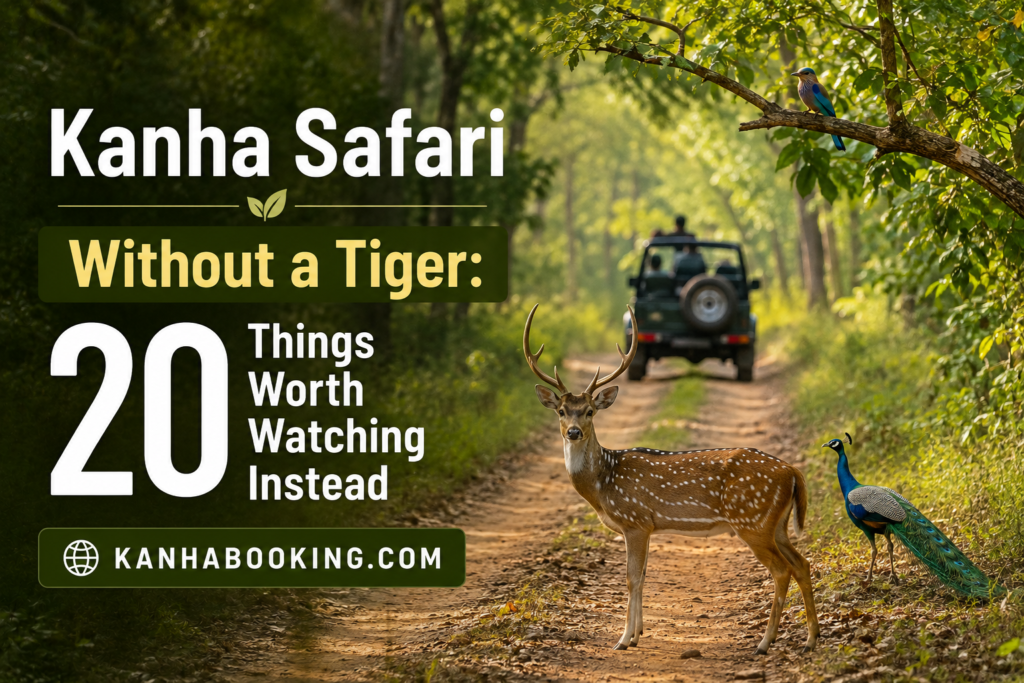
Let’s be honest. You booked that Kanha safari dreaming about the tiger. You woke up at 5 AM, sat in the open jeep, held your breath every time the guide slowed down near a waterhole. And then… nothing. The tiger stayed hidden.
It happens. Even to the luckiest travelers.
But here is the thing people never talk about: a Kanha safari without a tiger is still one of the most rewarding wildlife experiences in India. The forest is so alive, so layered, so full of surprises that the tiger is honestly just one chapter of a very long and beautiful story.
If you are planning a Kanha jungle safari or just came back feeling disappointed, this guide is for you. Here are 20 real things worth watching in Kanha National Park, none of them the tiger.
The Barasingha — Kanha’s Most Precious Resident
Called the “jewel of Kanha,” the hard-ground barasingha is found nowhere else in such numbers on earth. Once down to barely 66 animals in the 1970s, Kanha’s conservation efforts brought them back to over 800 today. Watching a herd graze in the open meadows, their branched antlers catching the morning light, is genuinely breathtaking. This alone is worth the safari.
Indian Wild Dogs (Dholes)
Kanha has one of the strongest dhole populations in India. These pack hunters work together in a way that is almost tactical — watching them coordinate a hunt across an open maidan is more thrilling than most tiger sightings. Keep your eyes open near the Kanha and Mukki zones.
Leopard Sightings
Elusive by nature, leopards in Kanha are spotted in the rocky ridges and dense bamboo stretches. They often rest on tree branches, perfectly camouflaged. A leopard sighting on a Kanha safari is rarer than a tiger — which makes it even more special when it happens.
Indian Gaur (Bison)
The gaur is the largest wild cattle in the world and Kanha has a strong population. These massive, muscular animals graze calmly near forest clearings and water sources. Standing close to one of these creatures in the open is humbling in the best possible way.
Sloth Bear
Kanha’s rocky forest zones are home to sloth bears. Shaggy, noisy, and surprisingly fast, sloth bears are spotted during early morning safaris near termite mounds or forest edges. They are unpredictable and that makes every sighting a little bit thrilling.
Chital Deer in Herds
Spotted deer move in large groups across Kanha’s grasslands. They are beautiful to photograph, often bathed in morning golden light. They also serve as natural alarm systems — if a herd freezes and stares at one spot, something is likely watching from the shadows.
Sambar Deer
India’s largest deer species is commonly seen near water bodies in Kanha. Sambar are usually solitary or in small groups and their alarm call — a sharp, barking sound is one of the most reliable tiger indicators in the forest. Even if you don’t see the tiger, you hear the story through the sambar.
Langur Monkeys as Forest Watchers
Gray langurs sit at treetops and their warning calls are the forest’s alarm system. Watch where they look. Wildlife guides often follow langur alarm calls to locate predators below. Langurs are funny, social, and essential to understanding how the jungle communicates.
Crested Serpent Eagle
Kanha has over 300 bird species and the crested serpent eagle is one of the most dramatic. It soars above the sal canopy with a distinctive call and is frequently seen on morning safaris scanning the forest floor from above.
Indian Roller
You cannot miss this bird. The Indian roller is a flash of electric blue in the open meadows of Kanha. It sits on fence posts and bare branches and then dives — that dive reveals its full spectrum of blues and purples. Wildlife photographers absolutely love it.
Indian Paradise Flycatcher
This is Madhya Pradesh’s state bird and Kanha is one of the best places to see it. The male trails long white ribbon-like tail feathers as it moves through the forest near streams. Spotting one moving through dappled light is a moment you don’t forget.
Painted Storks and Water Birds at Sarvantal
Near the Sarvantal lake inside the park, water birds gather in good numbers. Painted storks, pond herons, kingfishers, and egrets are regulars here. A slow drive past a waterhole at the right time is a birdwatcher’s dream.
Indian Monitor Lizard
Large, slow-moving, and prehistoric-looking — the Indian monitor lizard is one of the most frequently spotted reptiles in Kanha. They bask on open ground or rocky sections during the morning hours. Easy to miss if you’re only looking for big cats.
Indian Python
Not common, but not impossible. The Indian rock python is found in Kanha’s undergrowth and riverine areas. Safari guides who know the forest well can sometimes spot one coiled near the riverbed. One of those rare sightings that leave everyone in the jeep breathless.
Blackbuck Grazing in the Meadows
The Kanha and Sarhi meadows are known spots where blackbuck and barasingha graze side by side. Blackbuck are elegant, fast, and surprisingly comfortable around slow-moving safari vehicles. A good pair of binoculars here goes a long way.
The Kanha Meadows at Sunrise
This is not an animal, but it is absolutely worth watching. The Kanha maidan at sunrise — golden light filtering through sal trees, mist lifting off the grass, deer grazing in silence — is one of the most peaceful natural scenes in India. No tiger needed.
The Sal Forest Canopy
Kanha’s sal forests have a very particular beauty — dense green overhead, filtered light below, the sound of wind through leaves. Simply sitting in the jeep and watching the forest breathe around you is something many people underestimate until they experience it.
Jackal and Hyena Behavior
Often overlooked, jackals and striped hyenas play a key role in the ecosystem. Jackals are everywhere in Kanha and their behavior near a fresh kill or near tiger territory is fascinating to observe. Hyena sightings are rare and genuinely exciting.
Wild Boar with Piglets
Wild boar are found across all zones of Kanha and spotting a sow with piglets is one of those gentle, charming wildlife moments. They are also prey for tigers, so boar behavior can indicate predator activity nearby.
Stars Over the Forest at Night
This one is just for the evenings. Kanha National Park sits far from city light pollution. The night sky over the jungle from your resort or a quiet forest rest house is extraordinary. Many guests say it’s the quietest, most beautiful part of the entire trip.
Pro Tips for a Better Kanha Safari Experience
Go early. The morning safari slot (6 AM onwards) is consistently better for wildlife activity than the evening slot.
Pick the right zone. Mukki and Kanha zones have the most open grassland, which is ideal for barasingha, wild dogs, and general wildlife activity.
Carry binoculars. Birds, distant deer, and perched raptors all become accessible with binoculars. Most guides won’t remind you, but they make a huge difference.
Listen to the forest. Your guide reads alarm calls from deer and monkeys. Stay quiet and let them work. Many of the best sightings happen through sound first.
FAQs
A: Absolutely. With barasingha, wild dogs, leopards, and 300+ bird species, Kanha is a full wildlife experience regardless of tiger sightings.
A: The Kanha and Mukki zones have the most open meadows where barasingha herds are commonly spotted.
A: October to June. March to May gives the best wildlife visibility as vegetation thins and animals gather near water.
A: Yes, though it requires luck. Leopards are present across the park but their secretive nature makes sightings rare and special.
A: Indian roller, paradise flycatcher, crested serpent eagle, hornbill, and painted stork are among the highlights.
A: Yes. The park is well-managed, guides are knowledgeable, and the variety of wildlife makes it ideal for beginners.
A: Kanha has one of India’s strongest dhole populations. Pack sightings, especially in open meadows, are not uncommon.
Conclusion
A Kanha safari without a tiger sighting is not a failed safari. It is just a different kind of story.
The barasingha grazing at dawn, a pack of wild dogs cutting across a meadow, a paradise flycatcher trailing its long tail through the sal forest, the alarm call of a sambar echoing into the silence — these are not consolation prizes. They are what Kanha actually is when you let go of one expectation and open your eyes to everything else.