
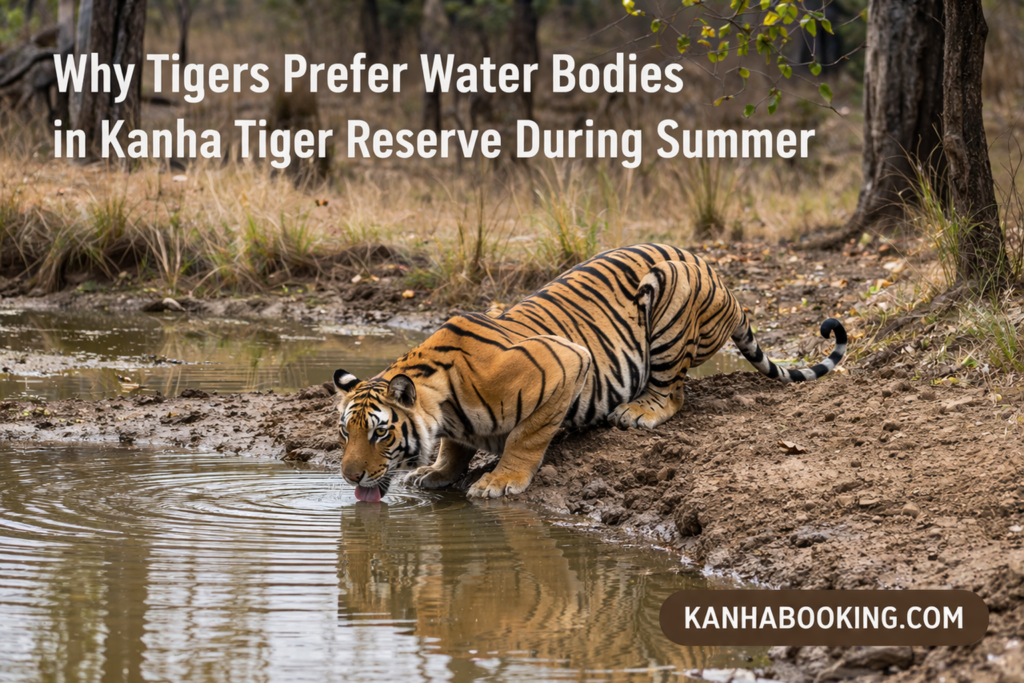
Summer in Kanha transforms the forest into a dramatic landscape of survival, adaptation, and opportunity. As temperatures rise and water becomes scarce, one pattern becomes unmistakably clear: tigers are almost always found near water bodies. For wildlife enthusiasts and photographers, understanding this behavior is the key to successful sightings.
If you’ve ever wondered why tiger sightings near water in Kanha summer is so common, the answer lies in biology, ecology, and survival instincts. From cooling their bodies to hunting prey, water plays a central role in shaping tiger activity during summer in Kanha National Park.
Understanding Summer in Kanha Tiger Reserve
Before diving into tiger behavior, it’s important to understand the environmental conditions. Kanha summer temperature often rises above 40°C during peak months like April, May, and June. The lush green forest of winter slowly turns dry, and many smaller water sources begin to disappear.
This creates a unique ecosystem where:
- Water becomes a limited and valuable resource
- Animal movement becomes concentrated around watering holes
- Visibility improves due to dry vegetation
These conditions directly influence Kanha National Park summer wildlife behavior, making water bodies the center of all activity.
Read Also: Why Do Kanha Safari Tickets Sell Out So Fast in Summer?
Thermoregulation: Why Tigers Need Water in Summer
Tigers, like most large mammals, struggle with extreme heat. They do not sweat like humans, which makes cooling down more difficult. This is where thermoregulation in Bengal tigers comes into play.
To maintain their body temperature, tigers rely on water in several ways:
They rest in shaded areas close to water bodies during the hottest parts of the day.
They frequently drink water to stay hydrated.
Most importantly, they engage in tiger wallowing behavior, where they sit or lie in water to cool down.
This explains the common sight of a tiger relaxing inside a pond or stream during a summer safari in Kanha Mukki and Kisli zones.
Wallowing and Swimming: Natural Cooling Techniques
One of the most fascinating aspects of Bengal tiger cooling behavior in Kanha is their love for water. Unlike many other big cats, tigers are excellent swimmers.
Do Tigers Swim in Kanha National Park?
Yes, they do—and quite often. Tigers in Kanha:
- Swim across forest streams and lakes
- Sit inside shallow waterholes for long periods
- Use mud and water to cool their bodies
This behavior is especially common during peak heat hours. Observing a tiger partially submerged in water is one of the most iconic moments of a Kanha summer safari experience.
Water Bodies as Hunting Grounds
Water bodies are not just for cooling—they are strategic hunting zones.
During summer, prey animals such as chital, sambar, and even the famous barasingha near water bodies in Kanha depend heavily on water sources. This creates a predictable pattern where prey visits specific locations daily.
Tigers take advantage of this by:
- Waiting silently near waterholes
- Using vegetation and terrain for camouflage
- Launching ambush attacks when prey is vulnerable
This is why predator activity near water sources increases significantly during summer. For visitors, this means a higher chance of witnessing real-time hunting behavior.
Tiger Habitat Preference in Summer
Tigers are highly adaptable, but their tiger habitat preference shifts during extreme weather.
In summer, they prefer areas that offer:
- Permanent water sources
- Dense shade
- Minimal disturbance
These areas often include Kanha forest streams and lakes, natural ponds, and artificial watering holes maintained by forest authorities.
As a result, tiger sightings near Kanha zone watering holes in May June becomes a consistent pattern across multiple zones.
Best Zones to Spot Tigers Near Water in Kanha
Choosing the right safari zone is crucial for maximizing your chances of sightings.
Some of the best zones to spot tigers near water in Kanha include:
- Mukki Zone – Known for its rich water sources and high tiger activity
- Kisli Zone – Offers a mix of open meadows and water bodies
- Kanha Zone – Core area with excellent wildlife density
These zones are particularly popular during summer safari Kanha Mukki and Kisli zones, as they provide consistent access to active watering holes.
How Summer Heat Affects Tiger Movement
A key question many travelers ask is: how does summer heat affect tiger movement in Kanha National Park?
The answer lies in energy conservation.
During extreme heat:
- Tigers reduce daytime movement
- They remain close to water bodies
- They become more active during early morning and evening
This predictable pattern is why the best time to spot tigers near water in Kanha is during safari hours—especially early mornings.
Watering Holes: The Heart of Summer Safaris
The importance of watering holes in Kanha National Park cannot be overstated. These locations become the center of all wildlife activity.
At a single waterhole, you may observe:
- Deer herds arriving cautiously
- Birds gathering around the edges
- A tiger silently approaching from the forest
For photographers, this offers incredible opportunities for wildlife photography near water in Kanha. The contrast of dry landscapes with reflective water surfaces creates dramatic compositions.
Wildlife Behavior Around Water Bodies
Water sources attract a wide range of species, making them biodiversity hotspots.
Apart from tigers, you can observe:
- Barasingha grazing nearby
- Sambar deer cooling themselves
- Wild boars digging around moist soil
This interaction highlights the interconnected ecosystem of Kanha, where every species depends on water for survival.
Wildlife Sighting Tips for Kanha Summer Season
To make the most of your safari, understanding wildlife sighting tips Kanha summer season is essential.
Focus on water bodies during your safari, as most activity is concentrated there. Listen carefully to alarm calls, which often indicate the presence of a predator nearby.
Patience is key—spending time near active watering holes can significantly improve your chances. Additionally, choosing experienced guides can help track tiger movement effectively.
The Complete Summer Safari Experience
A Kanha summer safari experience is intense but incredibly rewarding. The dry forest, golden grasslands, and concentrated wildlife activity create a raw and authentic jungle atmosphere.
While the heat can be challenging, it also offers unmatched opportunities for tiger sightings. The combination of predictable movement, water dependency, and improved visibility makes summer the most strategic season for wildlife enthusiasts.
Final Thoughts
The relationship between tigers and water in Kanha is a perfect example of how nature adapts to extreme conditions. From cooling their bodies through wallowing to using waterholes as hunting grounds, every behavior is driven by survival.
For visitors, understanding this connection is the key to unlocking unforgettable kanha jungle safari experiences. Whether you are tracking pugmarks near a stream or waiting silently by a watering hole, every moment brings you closer to witnessing the true essence of the wild.
If your goal is to see tigers in action, there is no better strategy than following the water—because in Kanha’s summer, water is where life happens.
FAQs – Tiger Behavior Near Water in Kanha During Summer
Tigers stay near water bodies to regulate body temperature, stay hydrated, and hunt prey that frequently visits these areas.
Early morning and late evening safaris are the best times, as tigers are most active and often visit waterholes during cooler hours.
Yes, tigers in Kanha are excellent swimmers. They often swim across streams and sit in waterholes to cool down during peak summer.
During extreme heat, tigers reduce daytime movement, stay close to water, and become more active during early morning and evening.
You can commonly see chital, sambar, barasingha, wild boar, and sometimes predators like tigers near water sources.
Wallowing is when tigers sit or lie in water or mud to cool their bodies and protect themselves from heat.
During summer, water becomes scarce, so animals depend on limited waterholes for drinking, making them predictable targets for predators.
Focus on waterholes, listen to alarm calls, follow experienced guides, and remain patient during safaris.
Temperatures often exceed 40°C during April, May, and June, making water bodies essential for wildlife survival.
Yes, waterholes offer excellent opportunities for wildlife photography due to high animal activity and natural reflections.