
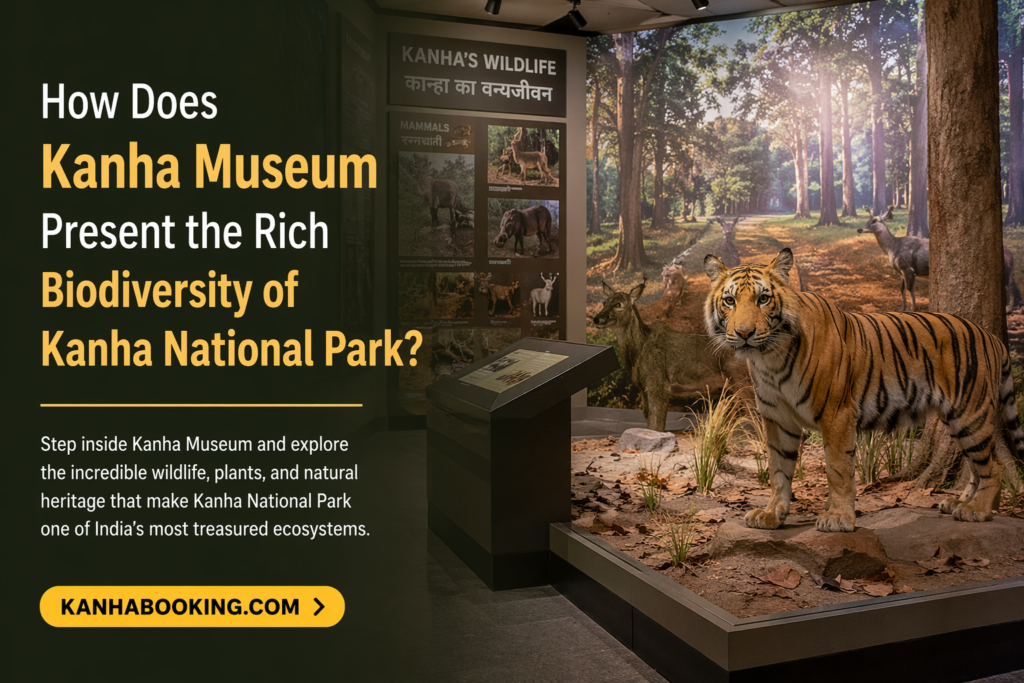
When you visit Kanha National Park, the safari through dense sal forests and open meadows is just one part of the experience. But did you know there is an entire museum dedicated to telling the story of this jungle? The Kanha Museum and Interpretation Centre is a must-visit stop that brings the rich biodiversity of Kanha National Park to life even before you step into the wild.
What Is the Kanha Museum and Interpretation Centre?
Located near the Khatia (Kisli) Gate of Kanha National Park, the Kanha Museum and Interpretation Centre is a free educational facility set up by the forest department. It is designed to help visitors whether families, students, wildlife enthusiasts, or first-time safari-goers understand the incredible flora and fauna of Kanha before and after their jungle safari.
Unlike a typical museum with glass cabinets and old photographs, the Kanha Interpretation Centre uses modern tools like audio-visual displays, 3D models, life-size animal exhibits, and real animal skeletons to create an immersive experience. The centre is especially popular with children and families as it makes wildlife education engaging and interactive.
How Does the Museum Showcase Kanha’s Biodiversity?
The Kanha Museum and Interpretation Centre is thoughtfully designed to cover every layer of Kanha’s rich ecosystem. Here is a look at how it presents the biodiversity of this remarkable national park.
Bengal Tiger — The King of Kanha
The most prominent section of the museum is devoted to the Bengal tiger, the star attraction of every Kanha gypsy safari. Through detailed information boards, photographs, tiger pugmarks, and video displays, the museum explains how Project Tiger, launched in 1973, helped revive the tiger population inside Kanha Tiger Reserve. Visitors can learn about tiger behavior, territory, hunting patterns, and the ongoing conservation efforts that have made Kanha one of the best tiger safari destinations in Madhya Pradesh.
Barasingha — The Pride of Kanha
One of the museum’s most important stories is the conservation of the hard-ground barasingha, also known as the swamp deer. This rare species was once on the edge of extinction, with only a few dozen individuals surviving in Kanha. The interpretation centre dedicates special space to documenting how dedicated wildlife management and habitat protection brought the barasingha back from the brink. Seeing this exhibit before a wildlife safari makes the experience of spotting barasingha grazing in open meadows all the more meaningful.
Birdlife of Kanha National Park
With over 300 bird species recorded inside Kanha National Park, the museum’s birdwatching section is a treasure trove for bird lovers. Display panels and illustrated guides cover key species like the Paradise Flycatcher (State Bird of Madhya Pradesh), the Crested Serpent Eagle, the Indian Roller, the Malabar Pied Hornbill, and the Racket-Tailed Drongo. These visual guides help visitors identify birds during a Kanha birdwatching tour or even during a morning safari.
Other Wildlife of Kanha
The museum does not stop at tigers and deer. It covers the full range of mammals found in Kanha, including leopards, Indian wild dogs (dholes), sloth bears, Indian bison (gaur), jackals, and several species of deer such as chital and sambar. Life-size models and animal skeletons displayed in the centre give visitors a rare close-up look at animals they might not easily spot during a jungle safari in Kanha.
Key Exhibits You Should Not Miss at the Kanha Museum
Audio-Visual Displays
The interpretation centre features well-produced short films and audio-visual presentations that take you through the different zones of Kanha from the dense bamboo forests to the shining rivers and open grasslands. These films are a wonderful way to understand the landscape before a Kanha National Park gypsy safari.
3D Animal Models
Highly detailed 3D models of key wildlife species like the Bengal tiger, barasingha, leopard, and gaur allow visitors to observe the size and features of these animals up close. This is particularly exciting for children and families who may not get a clear view of all animals during a safari.
Animal Skeletons and Bone Structures
Real animal skeletons displayed at the museum offer a scientific perspective on the wildlife of Kanha. These are especially useful for students, researchers, and wildlife photographers who want a deeper understanding of animal anatomy in the context of Kanha National Park flora and fauna.
Tribal Culture and Heritage Section
The Kanha Interpretation Centre also highlights the cultural history of the Gond and Baiga tribes who have lived alongside this forest for centuries. Traditional tools, artwork, and lifestyle information are displayed, helping visitors understand the deep human connection to Kanha’s jungle long before it became a wildlife reserve.
Tiger Conservation Information
A dedicated section explains how tiger conservation in Kanha National Park works today from camera trap monitoring and forest patrol to anti-poaching measures. This is an eye-opening exhibit for anyone interested in wildlife protection and eco-tourism in central India.
Visitor Tip: Visit the Kanha Museum and Interpretation Centre before your morning safari. Understanding what to look for tiger pugmarks, bird calls, deer behavior will make your Kanha gypsy safari experience far more rewarding.
Why Is the Kanha Museum Important for Wildlife Tourism?
The Kanha Museum and Interpretation Centre plays a vital role in responsible wildlife tourism. Many visitors arrive at Kanha National Park without much knowledge of its ecosystem. The centre bridges that gap by offering context, education, and visual tools that deepen appreciation for the wildlife they are about to encounter.
For families visiting with children, the museum is a perfect starting point. Kids who see the 3D tiger model or learn about barasingha conservation at the centre are far more engaged and observant during their Kanha jungle safari. For wildlife photographers, understanding bird species and animal behavior through the exhibits helps them plan better shots.
The free entry also makes the Kanha Museum an inclusive experience, one that any visitor, regardless of budget, can access and benefit from. This aligns perfectly with the spirit of eco-tourism and conservation education that Kanha Tiger Reserve stands for.
Visiting Kanha Museum: Practical Information
The Kanha Interpretation Centre is open to visitors on most days and is easily accessible near the Khatia Gate entrance. Since entry is free, it requires no prior booking. The best time to visit is just before or after your safari either early morning or in the late afternoon.
The centre is ideally combined with other non-safari activities at Kanha like guided nature walks, bird watching tours, and tribal village tours. Together, these experiences give you a complete and well-rounded picture of life in and around Kanha National Park.
The best time to visit Kanha overall is from October to June, when the weather is pleasant and wildlife sightings are at their peak. The museum is an especially wonderful addition to a trip during the summer months (April to June), when animals gather near water sources and the park’s ecosystem is at its most visible.
Frequently Asked Questions
It is located near Khatia (Kisli) Gate of Kanha National Park, the main entry point from Mandla side.
No, entry is completely free as it is a government-managed educational centre.
You can explore 3D wildlife models, skeletons, audio-visual exhibits, tiger and barasingha conservation displays, birdlife, and tribal culture sections.
Yes, it is interactive and educational, making it ideal for both kids and adults.
It helps you identify animals, birds, and pugmarks, making your safari more informative and enjoyable.
The best time is before your morning safari so the information enhances your jungle experience.
Yes, it has a dedicated section explaining the conservation success of the hard-ground barasingha.
Conclusion
The Kanha Museum and Interpretation Centre is not just a museum, it is the perfect gateway to understanding the rich biodiversity of Kanha National Park. From the story of the Bengal tiger and the rescued barasingha to the 300 plus bird species and ancient tribal heritage, the centre brings the entire jungle to life in one place.
Whether you are a first-time visitor, a wildlife photographer, a student, or a family on vacation, spending time at the Kanha Interpretation Centre will make your Kanha jungle safari far more meaningful and memorable. Best of all, it is completely free.
So the next time you plan a wildlife trip to Kanha National Park, make the museum your very first stop because understanding the jungle is the first step to truly experiencing it.






This Post Has One Comment