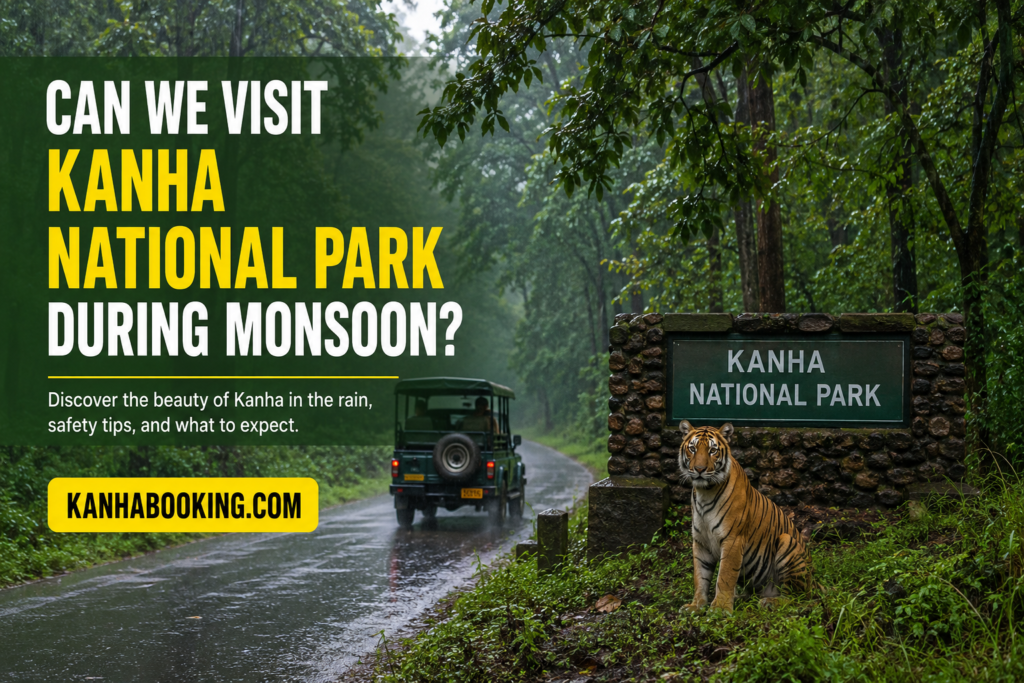
Every year, thousands of wildlife lovers ask this exact question when the rains arrive. The answer is not a straight yes or no and understanding the difference could save your trip from disappointment or, on the flip side, help you discover a side of Kanha that most tourists never see.
Here is everything you need to know before booking a monsoon visit to Kanha National Park.
Is Kanha National Park Open During Monsoon?
Kanha National Park’s core safari zones remain closed from July 1 to October 15 every year and reopen for visitors after that. This annual monsoon closure applies to all four major core zones — Kisli, Kanha, Mukki, and Sarhi. The heavy rainfall Kanha receives during these months, averaging around 1,800 mm, makes forest tracks waterlogged, muddy, and genuinely unsafe for gypsy safaris. The closure exists to protect both wildlife and visitors.
So if you are hoping to drive through the core jungle between July and mid-October, that option is off the table.
However, this is the part most people miss; Kanha National Park is not completely shut during the monsoon.
Buffer Zones Stay Open All Year
While the core zones go into their annual rest, Kanha’s buffer zones remain accessible to visitors throughout the monsoon season. The buffer zones open for safaris include Khatia Zone, Khapa Zone, Phen Zone, and Sijora Zone.
These zones sit on the outer ring of the reserve and offer a very different kind of experience compared to core zone safaris. Tiger sightings here are rare and should not be your expectation. But for travellers who want to be inside a living, breathing jungle during its most dramatic transformation of the year, the buffer zones deliver something genuinely special.
The forest during monsoon is unlike anything you will see in winter or summer. Every shade of green you can imagine coats the landscape. Streams that were dry channels in April become rushing rivers. Waterfalls appear from nowhere. The air smells of wet earth and wild grass. It is raw, lush, and alive in a completely different way.
Also Read: Which Safari Zones Are Open During Monsoon in Kanha National Park?
What Can You Actually See During a Monsoon Safari?
Managing expectations honestly is important here. Do not visit Kanha in monsoon expecting tiger encounters. The dense vegetation makes sightings extremely difficult even for experienced naturalists, and big cats use this season to move deeply into the forest undisturbed.
What you can genuinely enjoy during a monsoon safari in Kanha’s buffer zones includes the following.
- Birdwatching: Monsoon brings incredible birding opportunities. Resident species are highly active, and the thick green canopy becomes a stage for colourful birds that are nearly impossible to spot in dry seasons. Kingfishers, barbets, owlets, and jungle fowl are commonly seen.
- Reptile and insect watching: Monsoon is the peak season for reptile activity. Snakes, monitor lizards, and various frog species become visible near water bodies and forest edges. For nature enthusiasts and macro photographers, this is a genuinely exciting time.
- Landscape photography: The transformation of Kanha’s meadows and forests during monsoon creates extraordinary photography opportunities. The famous open maidans fill with tall grass and wildflowers. Fog drifts through the sal forest in the early mornings. The visual drama of the jungle is at its peak.
- Peaceful solitude: Crowds are gone. Resorts near Kanha offer off-season rates that can be significantly lower than peak season. If you enjoy the idea of having a jungle lodge almost entirely to yourself, monsoon is your window.
What to Expect on a Monsoon Buffer Zone Safari
Monsoon safaris operate differently from peak season. A few practical realities to prepare for:
Safari cancellations can happen without warning. If rainfall is heavy enough on a given day, the forest department may suspend safari operations for safety. Most licensed operators and booking platforms, like Kanha safari booking, will guide you on refund and rescheduling policies if this occurs.
Carry proper rain gear. A lightweight raincoat or poncho and a waterproof bag for your camera equipment are essential. An umbrella can work in a stationary situation but is impractical inside a moving open gypsy.
Keep your itinerary flexible. Unlike peak season where mornings are predictable, monsoon weather can shift rapidly. Build buffer days into your trip rather than arriving for a single-night stay expecting it to go perfectly.
Permits are far easier to get. Being the off-season, safari slots in buffer zones do not sell out weeks in advance. You can typically book a week ahead comfortably.
Monsoon vs Post-Monsoon: A Critical Distinction
There is an important difference between visiting in the monsoon and visiting in the early post-monsoon, which many travellers confuse.
Monsoon proper runs from July to mid-October, with core zones closed. Post-monsoon is when the park reopens around October 15. The landscape right after reopening is at its absolute greenest and most atmospheric, almost as stunning as deep monsoon but with core zone safaris fully operational and wildlife emerging from months of undisturbed forest time.
If your heart is set on both the lush jungle appearance and the possibility of tiger sightings, timing your visit for the last week of October or early November is arguably the smartest move of all. You get the beauty of the freshly renewed forest, low tourist crowds, and a park that is fully open.
Should You Visit Kanha During Monsoon?
Visit during the monsoon if you enjoy birdwatching, nature photography, or simply love the beauty, greenery, and peaceful atmosphere of the forest more than just spotting wildlife. If off-season resort prices and peaceful solitude appeal to you, monsoon is worth considering.
Skip monsoon and go in peak season if your main goal is tiger sightings, large mammal encounters, or a classic wildlife safari experience. October to March delivers all of that far more reliably.
For first-time visitors, the honest advice is to wait for October 15 onwards. The post-monsoon opening of Kanha is one of the most rewarding times to experience the reserve, and you will leave with a far more complete jungle experience.
Frequently Asked Questions
Core zones close from July 1 to October 14. Buffer zones — Khatia, Khapa, Phen, and Sijora stay open all year.
October 15 every year.
Very unlikely. Dense vegetation and closed core zones make tiger sightings rare during this season.
Buffer zones — Khatia, Khapa, Phen, and Sijora. Core zones (Kisli, Kanha, Mukki, Sarhi) remain closed.
Yes, for birdwatchers and nature photographers. For tiger sightings, wait until October onwards.
Raincoat, waterproof camera bag, insect repellent, neutral-coloured full-sleeved clothes, and closed footwear.
Yes, most resorts stay open with attractive off-season rates.
Conclusion
Kanha National Park during monsoon is not for every traveller, but for the right ones, it is unforgettable. The forest transforms into something raw and cinematic, the crowds disappear, and the buffer zones offer a quiet, immersive experience that peak season simply cannot replicate. Birdwatchers and landscape photographers will find this season genuinely rewarding. If tiger sightings are your goal, hold your trip until mid-October, when the core zones reopen and the jungle is still lush from the rains. Either way, Kanha never disappoints, it just delivers something different depending on when you arrive. Book smart, pack right, and let the jungle surprise you.