
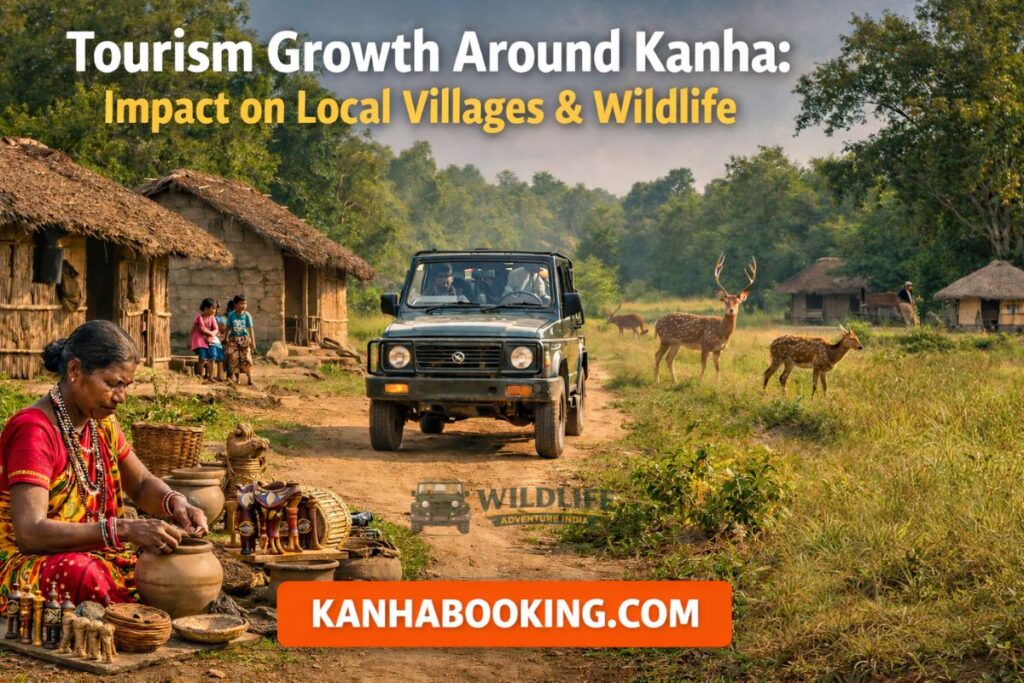
Tourism around Kanha National Park has increased a lot in the past few years. This famous tiger reserve is known for its dense sal forests, open grasslands, and rich wildlife. Every year, thousands of visitors from India and other countries come here to enjoy jungle safaris, wildlife photography, and nature experiences.
Because of this increasing tourism, many nearby villages have seen big changes. Tourism has helped create jobs and improve local facilities. At the same time, it has also raised concerns about protecting wildlife and maintaining the natural environment. Understanding the tourism growth around Kanha National Park helps us see how tourism can benefit both local communities and wildlife conservation.
Growing Popularity of Wildlife Tourism in Kanha
Wildlife tourism in Kanha National Park has become very popular in recent years. Many travelers want to experience tiger safaris and explore India’s forests. Kanha is especially famous for protecting the rare barasingha (swamp deer) and having a good population of Bengal tigers.
Because of this, many tourists plan trips to the park every year. The tourism growth around Kanha National Park has also increased due to better road connectivity, easy online safari bookings, and promotion of eco-tourism.
When people search online for best wildlife tourism near Kanha tiger reserve villages, they find many resorts, safari packages, and travel services around the park. Tourism has therefore become an important activity that brings visitors and investment to rural areas near the forest.
Development Around Kanha Safari Gates
Several entry gates of Kanha National Park have developed quickly because of tourism. Popular safari gates such as Khatia, Mukki, and Sarhi now have many resorts, hotels, and tourist facilities.
Earlier, these places were small villages with very limited facilities. But with the rise of tourism development near Kanha National Park gates, the local economy has grown.
Today, visitors can find many accommodation options near the safari gates. Tourists searching for accommodation near Kanha safari gates can choose from budget lodges, homestays, and luxury wildlife resorts. Because of tourism, some villages have slowly turned into important tourism centers.
Employment Opportunities for Local People
One of the biggest advantages of tourism is the creation of jobs for people living near the park. Earlier, many villagers depended mainly on farming or small forest-related work. Now tourism has opened many new job opportunities.
Many villagers work as safari drivers, guides, hotel staff, cooks, housekeeping workers, and security guards. These job opportunities for villagers near Kanha National Park have helped many families earn better income.
Young people from nearby villages are also getting training in guiding tourists and working in the hospitality sector. Because of this, tourism has become an important source of livelihood for many local families.
When visitors search online for how tourism helps local communities around Kanha, they often learn that many tourism services are run by people from nearby villages.
Growth of Local Businesses and Homestays
Tourism has also encouraged villagers to start their own small businesses. Many local residents now run homestays, food stalls, handicraft shops, and village tour services.
The economic benefits of wildlife tourism in Kanha can clearly be seen in villages near safari gates. Many tourists buy handmade items, tribal jewelry, and local crafts as keepsakes.
Homestays are becoming very popular because some travelers prefer staying in local houses instead of big resorts. These accommodations let visitors experience village life and meet local people.
Such activities support community-based tourism around Kanha National Park, which helps both tourists and local residents.
Improvement in Infrastructure
Tourism has also improved infrastructure in many villages around the park. Roads leading to the safari gates have been repaired and widened for tourist vehicles.
Better roads have made it easier for visitors to travel to Kanha National Park. At the same time, local villagers can now travel more easily to nearby towns and markets.
The infrastructure development near Kanha National Park villages has also improved electricity supply, mobile network coverage, and local markets.
These improvements have made daily life easier for local people while supporting tourism growth in the region.
Promotion of Tribal Culture
The area around Kanha is home to tribal communities such as the Gond and Baiga tribes. Tourism has helped bring attention to their culture and traditions.
Many visitors are interested in tribal culture tourism near Kanha National Park. They enjoy watching traditional dance performances, listening to tribal music, and learning about local customs.
Some resorts organize cultural programs where tribal artists perform traditional dances for tourists. This helps local performers earn income and also keeps their traditions alive.
Travelers who want a deeper experience often look for Baiga tribal village experience near Kanha, where they can learn about the lifestyle and traditions of these communities.
Impact of Tourism on Wildlife
Although tourism brings many benefits, it can also affect wildlife if not managed properly. Increased tourist vehicles, construction of resorts, and human activities near forest areas can sometimes disturb animals.
Researchers studying the wildlife impact of tourism in Kanha National Park often say that strict rules are necessary to protect wildlife.
Fortunately, the forest department controls safari routes, limits the number of vehicles, and monitors tourist activities. These steps help reduce disturbance while allowing visitors to enjoy the forest.
Maintaining a balance between wildlife protection and tourism in Kanha is very important for the future of the park.
Tourism and Wildlife Conservation
Tourism also helps wildlife conservation in many ways. Money collected from safari permits, park entry tickets, and tourism services is used for conservation work.
These funds support forest patrols, wildlife monitoring programs, and habitat protection. Because of this support, wildlife conservation supported by Kanha tourism has become stronger over the years.
One great example is the conservation of the barasingha (swamp deer). This rare species has recovered successfully in Kanha National Park thanks to conservation programs supported partly by tourism.
Many visitors who learn about these efforts become more interested in protecting wildlife.
Human-Wildlife Interaction Near Villages
Another challenge connected with tourism growth is the increase in interaction between wildlife and nearby villages.
Animals like deer, wild boar, and sometimes leopards may enter village areas while searching for food. Managing human wildlife conflict near Kanha villages therefore becomes important.
Forest authorities work with villagers to spread awareness about wildlife safety and prevention methods. Compensation schemes are also provided when crops or livestock are damaged by animals.
These measures help manage wildlife movement around Kanha buffer zones while protecting both people and wildlife.
Importance of Sustainable Tourism
For tourism to continue benefiting both people and wildlife, sustainable tourism practices are necessary.
The idea of sustainable tourism practices in Kanha National Park focuses on protecting nature while allowing visitors to enjoy the forest.
Important steps include limiting safari vehicles, promoting eco-friendly resorts, and encouraging proper waste management.
Many resorts are now adopting eco-friendly tourism near Kanha National Park by using solar energy, rainwater harvesting systems, and environmentally friendly construction.
Visitors are also encouraged to follow park rules, maintain silence during safaris, and avoid littering.
Future of Tourism Around Kanha
The future of tourism around Kanha National Park looks very promising. More people are becoming interested in wildlife tourism and nature travel.
If the tourism growth around Kanha National Park is managed carefully, it can continue to support conservation and community development.
With responsible tourism practices, Kanha can remain one of India’s best wildlife destinations for many years to come.
Conclusion
Tourism around Kanha National Park has grown rapidly and brought many positive changes to nearby villages. It has created jobs, improved roads, and helped local businesses such as homestays, shops, and safari services grow. At the same time, increasing tourism also highlights the need to protect wildlife and maintain the natural balance of the forest. Careful planning, strict safari rules, and eco-friendly tourism practices are important for the future. When tourism is managed responsibly, it can support both wildlife conservation and the development of local communities while keeping Kanha a leading wildlife destination.
Frequently Asked Questions (FAQs)
Tourism is increasing because more people are interested in wildlife safaris and nature travel. Better roads and online booking systems have also made it easier to visit Kanha.
Tourism provides jobs in resorts, safari services, and guiding. These job opportunities for villagers near Kanha National Park help improve local income and development.
Tourism can disturb wildlife if it is not controlled. However, strict park rules help reduce the wildlife impact of tourism in Kanha National Park.
Money from tourism supports forest protection, wildlife monitoring, and conservation projects. This is why wildlife conservation supported by Kanha tourism is very important.
Sustainable tourism means traveling in a way that protects nature and supports local communities. Responsible wildlife tourism helps keep the forest safe for future generations.