
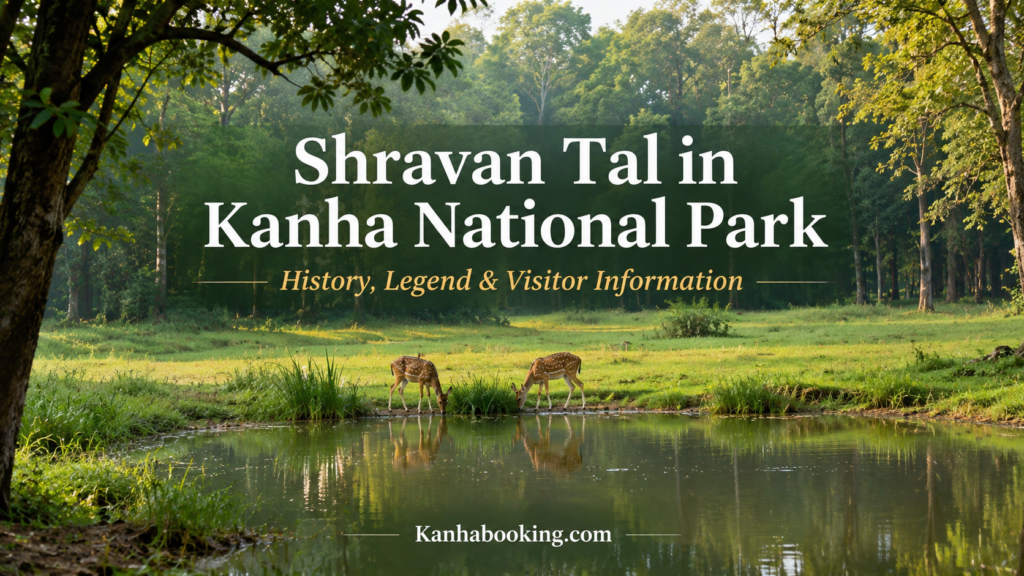
Shravan Tal in Kanha National Park is a small water body located in the Central Kanha Grasslands of Madhya Pradesh. It is known for its connection with the legendary story of Shravan Kumar from the Ramayana and its importance to the local forest ecosystem. Surrounded by the natural landscapes of Kanha Tiger Reserve, this pond is an interesting place for visitors who want to explore the park beyond its famous wildlife and tiger sightings.
The story associated with Shravan Tal adds cultural and historical significance to the Kanha landscape, while its role as a wildlife water source makes it an important natural feature of the reserve.
Where Is Shravan Tal Located in Kanha National Park?
Shravan Tal is a small pond tucked inside the Central Kanha Grasslands of Madhya Pradesh’s Kanha Tiger Reserve. Framed by open grasslands and forest cover, the site is tied to a famous tale from the Ramayana. In the reserve’s official Tiger Conservation Plan, this small earth-bund tank stands out for both its ecological value and its deep cultural roots.
How Is Shravan Tal Connected to the Kanha Grasslands?
The Kanha Grasslands are an important part of the reserve’s landscape. These open grasslands provide feeding grounds for herbivores and attract different animals throughout the year.
Shravan Tal supports this ecosystem by serving as a vital water hole for local wildlife. Sitting right in the middle of the open plains, it also plays a key role in sustaining Kanha’s wider grassland and forest habitats.
What Is the Story Behind Shravan Tal?
Shravan Tal is associated with the story of Shravan Kumar, a devoted son mentioned in the Ramayana. According to the popular legend, Shravan Kumar was travelling with his blind parents and carrying them on a pilgrimage.
During their journey, his parents became thirsty, so Shravan went to a nearby pond to collect water for them. At the same time, King Dashrath, the father of Lord Rama, was hunting in the forest.
When Shravan dipped his water vessel into the pond, the sound was mistaken by King Dashrath for an animal drinking water. Believing it to be a deer, the king released an arrow in the direction of the sound.
The arrow struck Shravan Kumar, leaving King Dashrath devastated once he realized his mistake. That tragic moment became a lasting part of Ramayana lore, and locals still link this pond to the legend today.
The Legend of Shravan Kumar and King Dashrath
The story highlights Shravan Kumar’s devotion to his parents and King Dashrath’s tragic mistake.
After discovering that he had accidentally killed Shravan, King Dashrath was filled with regret. The legend also describes how Shravan’s parents were deeply distressed by the incident.
The story is remembered as an example of parental devotion, responsibility, and the consequences of unintended actions.
Why Is the Pond Named Shravan Tal?
The pond is called Shravan Tal because of its association with the legendary incident involving Shravan Kumar and King Dashrath.
According to popular local belief, this is the water body where Shravan had gone to collect water for his parents before the tragic event took place.
The name connects the natural landscape of Kanha with an important story from Indian mythology.
Historical and Cultural Significance of Shravan Tal
Shravan Tal is more than a small waterbody within Kanha National Park. Its association with the Ramayana gives it cultural and mythological importance.
The story of Shravan Kumar has been remembered through generations and is connected with values such as devotion, respect for parents, and personal responsibility.
For visitors exploring Kanha, Shravan Tal provides an opportunity to learn about the cultural stories associated with the forest landscape.
Its Connection with the Ramayana
The Ramayana is one of India’s most significant epics, containing stories of devotion, duty, relationships, and moral responsibility.
Shravan Kumar is best known for his lifelong devotion to caring for his blind parents. The association of this story with Shravan Tal gives the pond a distinctive place among the cultural attractions of Kanha.
It also demonstrates how mythology and local traditions can become connected with natural places and landscapes.
Local Beliefs and Mythological Importance
The story associated with Shravan Tal forms part of the local cultural understanding of the Kanha region.
Visitors interested in mythology and Indian traditions may find the pond particularly interesting because it connects an actual forest waterbody with a well-known legendary story.
It is important to understand that the incident is a mythological tradition associated with the location rather than a historically verified event.
Why Is Shravan Tal Important to Kanha’s Wildlife?
Apart from its cultural significance, Shravan Tal has ecological importance within Kanha Tiger Reserve.
According to the official Tiger Conservation Plan for the Kanha Tiger Reserve, Shravan Tal is a small earth-bound tank in the Central Kanha Grasslands and an important waterbody that attracts numerous wild animals.
Water sources are essential for maintaining healthy wildlife habitats, particularly in forest environments where natural water availability can vary with the seasons.
Role of the Waterbody in the Forest Ecosystem
Waterbodies play an important role in supporting wildlife and maintaining the ecological balance of forest habitats.
Shravan Tal provides a water source within the Central Kanha Grasslands and contributes to the natural environment used by different wildlife species.
Such water sources are particularly important during warmer months when the availability of water may become limited in certain parts of the forest.
They can support the daily activities of herbivores and other animals that depend on accessible water sources.
Wildlife and Birds Around Shravan Tal
Kanha National Park supports a wide variety of wildlife, including Royal Bengal Tigers, Barasingha, Indian Gaur, leopards, spotted deer, and several bird species.
Waterbodies such as Shravan Tal can attract different animals looking for water, making them important parts of the forest ecosystem.
However, the presence of wildlife around the pond varies depending on natural conditions, animal movements, and seasonal water availability. Visitors should not expect guaranteed animal sightings at any particular waterbody.
What Can Visitors Experience at Shravan Tal?
Visitors exploring Kanha National Park can learn about the natural and cultural importance of Shravan Tal as part of the wider forest landscape.
The pond offers an interesting perspective on the relationship between wildlife habitats, local mythology, and the natural environment of Kanha.
Natural Surroundings and Forest Landscape
Shravan Tal is situated within the Central Kanha Grasslands, an area known for its open grasslands and surrounding forest vegetation.
The combination of water, grassland, and forest habitat contributes to the ecological diversity of the reserve.
For nature enthusiasts, the area represents another aspect of Kanha beyond its popular tiger sightings and regular wildlife attractions.
Exploring Shravan Tal During a Kanha Safari
A gypsy safari is the main way visitors explore the authorized tourism areas of Kanha National Park.
Shravan Tal is among the locations associated with the Kanha landscape and is included in the park’s official descriptions of its attractions.
However, actual access depends on the authorized safari route, zone allocation, and forest department regulations. Visitors should confirm whether the location is included in their permitted safari route rather than assuming every safari covers the pond.
How to Visit Shravan Tal in Kanha National Park?
Shravan Tal is situated inside Kanha Tiger Reserve, so visitors should plan their visit according to the park’s authorized tourism arrangements.
A regular Kanha jeep safari is the primary way to explore the permitted forest tourism routes.
Travellers passing through Kanha can stop by Shravan Tal during their safari. It is a great spot to take in the open grasslands, enjoy the surrounding forest, and see how the pond’s wildlife value ties into its local folklore.
During the safari, visitors can enjoy the natural beauty of the Central Kanha Grasslands while learning about the different habitats and wildlife found in this part of the reserve. The experience also provides an opportunity to discover lesser-known attractions of Kanha beyond its famous tiger sightings.
Important Visitor Guidelines
Travellers must practise responsible tourism to keep Kanha’s wildlife and ecosystem safe.
– Avoid littering inside the forest.
– Do not disturb or feed wild animals.
– Maintain a safe distance from wildlife.
– Follow the instructions of your safari guide.
– Avoid making loud noises during wildlife observation.
– Do not leave the authorized safari route.
Responsible visitor behavior helps preserve Kanha’s natural habitats and ensures a better wildlife experience for everyone.
Best Time to Visit Shravan Tal
The best time to explore Kanha National Park generally depends on weather conditions, wildlife activity, and personal travel preferences.
According to Madhya Pradesh Tourism, the park’s visitor season generally runs from October to June.
October to February: These months generally offer pleasant weather and comfortable conditions for exploring the forest. The landscape can appear greener following the monsoon.
March to June: Temperatures become warmer, and vegetation becomes drier. Wildlife may become more dependent on available water sources, although sightings are never guaranteed.
Visitors should check the latest park opening dates, safari availability, and seasonal regulations before planning their trip.
Frequently Asked Questions About Shravan Tal
1. Where is Shravan Tal located?
Shravan Tal is a small waterbody located in the Central Kanha Grasslands within Kanha Tiger Reserve, Madhya Pradesh.
2. What is the story behind Shravan Tal?
Shravan Tal is associated with the legend of Shravan Kumar, who was accidentally killed by King Dashrath while collecting water for his blind parents.
3. Is Shravan Tal connected to the Ramayana?
Yes. According to the popular Ramayana legend, the pond is associated with the incident involving Shravan Kumar and King Dashrath.
4. Can tourists visit Shravan Tal during a Kanha safari?
Shravan Tal is an attraction within Kanha Tiger Reserve, but access depends on the authorized safari route and Forest Department permissions. Visitors should confirm route details before booking.
5. What wildlife can be found around Shravan Tal?
Kanha supports wildlife such as Barasingha, spotted deer, Indian gaur, leopards, and tigers. Shravan Tal is an important waterbody that attracts wild animals, although specific sightings cannot be guaranteed.
6. Is Shravan Tal a natural lake or a man-made pond?
The official Kanha Tiger Reserve Conservation Plan describes Shravan Tal as a small earth-bound tank in the Central Kanha Grasslands.
7. Why is Shravan Tal important in Kanha National Park?
Shravan Tal has both cultural and ecological importance. It is associated with the Ramayana legend of Shravan Kumar and also serves as an important water body that attracts wildlife.
8. What is the best time to visit Shravan Tal?
October to June is generally the visitor season for Kanha National Park. The most suitable time depends on weather preferences and safari availability.
Conclusion
Shravan Tal is an interesting part of Kanha National Park because of its connection with Indian mythology and its importance to the forest ecosystem. Associated with the story of Shravan Kumar and King Dashrath, the pond represents a cultural connection between the natural landscape of Kanha and the traditions of the Ramayana.
Beyond its legendary significance, Shravan Tal is an important waterbody in the Central Kanha Grasslands that attracts wildlife. For visitors exploring Kanha, it offers another perspective on the reserve’s natural and cultural heritage beyond its famous tigers and grasslands.
Understanding the story and ecological importance of Shravan Tal can make a visit to Kanha National Park more meaningful, especially for travelers interested in exploring the forest’s lesser-known attractions.