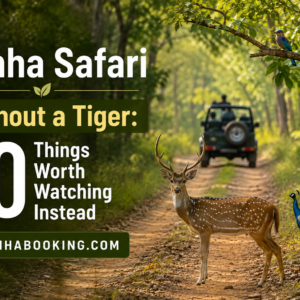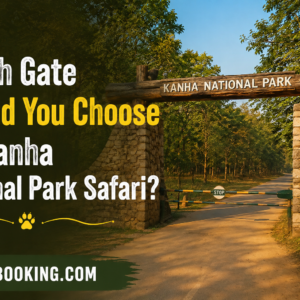

Most people who plan a Kanha safari have one thing in their head — the tiger. They search for the best tiger sighting zone, the right season, the right time of day. And honestly, that is a fair starting point. Kanha is one of the finest tiger reserves in India, and the Royal Bengal Tiger is its crown jewel.
But here is what nobody warns you about. The moment your jeep rolls into the forest at dawn and the mist is still sitting low over the sal trees, you stop thinking about tigers altogether. You start noticing everything else. The alarm call of a spotted deer somewhere in the undergrowth. A dhole pack moving silently through the grass. The sky turns orange above an open meadow while a barasingha herd grazes without a care in the world.
Kanha does not just show you wildlife. It pulls you into a living, breathing ecosystem that you cannot find anywhere else in India.
What Makes Kanha Different from Every Other Tiger Reserve
Kanha National Park sits in the heart of Madhya Pradesh, inside the Maikal range of the Satpuras. The core area covers 940 square kilometres, and the full tiger reserve stretches across nearly 1,950 square kilometres of dense sal forest, open grasslands, bamboo groves, and river banks.
This is the forest that Rudyard Kipling drew from when he wrote The Jungle Book. Mowgli, Sher Khan, Baloo — all of them came from these trees, these meadows, these tribal villages surrounding the park. When you do a Kanha jungle safari, you are not just spotting animals. You are walking through the landscape that created one of the most beloved stories ever written.
In the park there are more than 100 Bengal tigers living right within its boundaries. Yet it also keeps something a bit more rare, the hard-ground barasingha , a kind of swamp deer that almost went extinct. Back in the 1970s , only 66 or so were still around. Now, more than 800 move through Kanha’s meadows, and for them, this place is basically their only true home in the world. And no, that comeback was not some good luck. It happened because Kanha is one of the best managed national parks in Asia, really.
Understanding the Safari Zones Before You Book
Kanha has eight safari zones in total. Four core zones — Kanha, Kisli, Mukki, and Sarhi and four buffer zones — Khatia, Khapa, Sijhora, and Phen.
For first-time visitors, the Kanha and Mukki zones offer the best chance of spotting tigers. The Kanha zone has large open maidans where predators are easier to track, and the Mukki zone is popular for its remote sal forest stretches where big cats move frequently.
The Kisli zone sits right next to the Khatia gate, which is where most of the lodges and resorts are located. If you are staying near Khatia, Kisli is a convenient choice and still offers good wildlife activity.
Sarhi is newer and feels wilder. If you want a safari experience that feels completely off the beaten path, Sarhi delivers that raw, unfiltered forest feeling.
For those visiting during the monsoon months, only buffer zones remain accessible. The core zones are closed from July to mid-October, but buffer zone safaris still let you experience the forest greenery and spot deer, birds, and other wildlife.
When Should You Actually Visit
The park is open from October 15 to June 30 every year, and the experience varies quite a bit depending on when you go.
October to February is ideal for families and first-time visitors. The weather is cool, the animals are active throughout the day, and the forest feels welcoming rather than punishing. Migratory birds arrive during these months, making it wonderful for birdwatching too.
March to June is sort of the sweet spot for serious wildlife photography and, especially for those who are chasing tiger sightings. As the temperature starts climbing, water sources dry out, and animals tend to gather around the few waterholes that are still around. Meanwhile, the forest becomes less dense and visibility gets better, really quickly. During this stretch, tiger sightings go up a lot. In the mornings things can look amazing even when it’s summer, but, by the afternoon it gets very warm.
Morning safaris, starting around 6 AM, are generally better for spotting predators on the move. Evening safaris, starting around 3 PM, are perfect for golden-hour photography and birdwatching near the meadows.
What You Will Actually See Inside Kanha
Tigers are the headline, but they are not the whole story.
Dholes, or Indian wild dogs, live in big packs inside Kanha, and honestly it’s kinda thrilling to watch them. Their coordinated hunts across those open grasslands are among the most electrifying wildlife moments this forest can offer, you know, the kind you remember later. And leopards are around as well , but they stay rather secretive, so every sighting feels like a real privilege.
Sloth bears, gaur (Indian bison which are the largest wild cattle in the world), sambar deer, chital, barking deer, langurs — the forest is full of movement if you slow down and look properly. The barasingha herds grazing in the early morning light at Kanha meadow is a sight that stays with you long after you leave.
Over 300 bird species have been recorded in Kanha. The Indian Paradise Flycatcher, the Crested Serpent Eagle, the Malabar Pied Hornbill — experienced naturalists who guide your gypsy safari can point these out and help you see the forest in a completely different way.
How to Book Your Kanha Safari the Right Way
The most important thing about Kanha safari booking is timing. Each zone allows only a fixed number of jeeps per slot. During peak season from December to May, slots fill up weeks in advance.
You can book your Kanha safari online through a trusted private travel partner that assists with safari planning, zone selection, accommodation, and complete tour packages. Indian visitors should ideally book at least 30 days in advance, while international travellers are advised to plan and book around 90 days ahead.
Choose a zone that is close to where you are staying to avoid long early-morning drives. Book both a morning and an evening safari if you can — two slots double your chances of a meaningful wildlife encounter, and the atmosphere of Kanha at different times of day is completely different.
Carry neutral-coloured clothing, a good pair of binoculars, and a valid ID proof that matches your booking. Children under 5 years can accompany adults without a separate seat.
The Kanha Experience Goes Beyond the Safari
While the gypsy safari is the centrepiece of any Kanha visit, the surrounding region offers more. Guided tribal village tours take you into Gond and Baiga communities, where traditional art, earthen homes, and a deeply rooted connection with the forest make for a humbling experience.
The Interpretation Centre near Khatia gate has exhibits on tiger conservation, the barasingha recovery story, and the ecology of the park. It is worth a visit, especially for younger travellers.
Many jungle resorts near Kanha arrange campfire dinners, nature walks, and sunset excursions that round out the experience beautifully.
FAQs
A: Yes. With over 100 tigers in the reserve, Kanha is one of the best places in India for tiger sightings, especially from March to June.
A: Two to three nights gives you time for at least three to four safaris across different zones and times of day.
A: Kanha and Mukki zones have the highest tiger sighting frequency, thanks to open meadows and dense forest habitats.
A: Wear neutral, earthy colours — olive green, beige, or brown. Avoid bright colours and carry a light jacket for early mornings.
A: Both are excellent. Kanha offers more diverse wildlife and a larger, more scenic forest. Bandhavgarh has a higher tiger density. For a richer overall wild experience, Kanha wins.
A: Core zones are closed from July to mid-October. Buffer zone safaris are available in some months during monsoon.
Conclusion
Kanha is one of those places that changes how you think about wildlife travel. You arrive looking for one animal. You leave understanding an entire ecosystem. The tiger may or may not show up on your safari — that is the honest truth about any wild encounter. But the forest itself never disappoints. The mist over the meadows, the sound of dholes calling across the valley, the sight of a barasingha bull standing proud in golden morning light — these are the moments that make Kanha unforgettable.