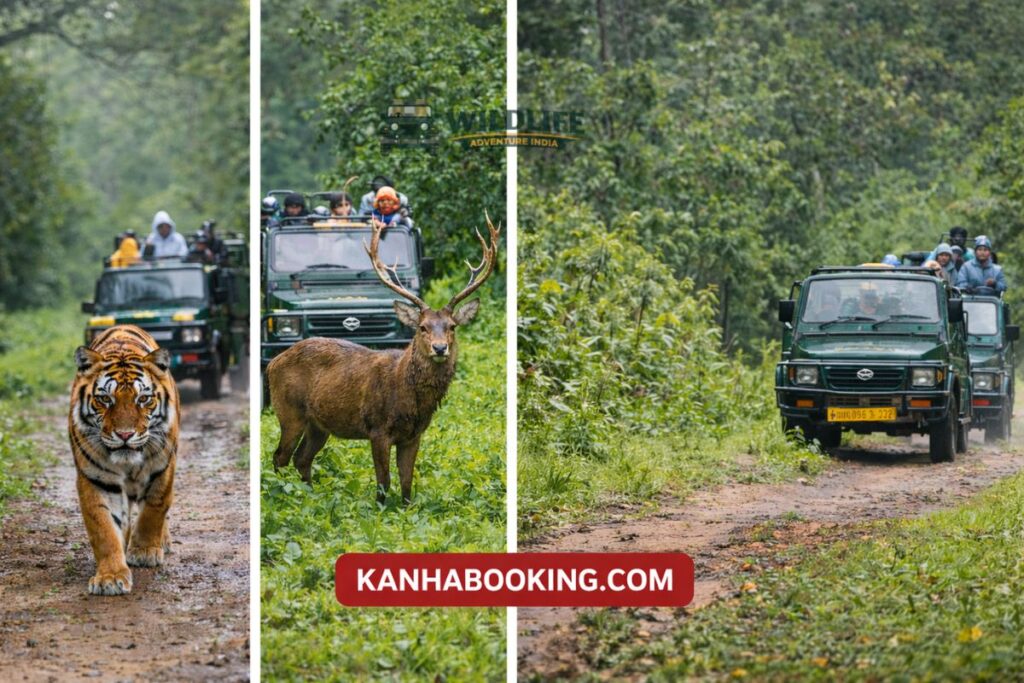
Kanha National Park, one of India’s most famous tiger reserves, has a unique safari schedule that changes with the seasons. During the monsoon season from July 1 to September 30 every year, core forest zones remain closed to tourists because of heavy rain, slippery roads, and to allow wildlife to rest. However, buffer safari zones remain open, giving visitors an opportunity to explore wildlife even when the main parts of the park are shut.
Why Most Safari Zones Close in the Rainy Season
The monsoon brings dense rainfall to Kanha, which makes forest tracks muddy and unsafe for tourists and safari vehicles. This season is also an important time for animals: many species are breeding, young ones are growing, and vegetation becomes very thick. For safety and conservation, the four core zones — Kanha, Kisli, Mukki, and Sarhi are closed from July through September. These areas usually offer the best tiger sightings, but during monsoon they remain off‑limits. However, visitors can enjoy monsoon wildlife viewing Kanha in buffer zones, where safaris remain accessible and animals are often more active in the lush greenery.
Buffer Zones Stay Open During Monsoon
While the core safari zones are shut down for maintenance and ecological reasons, buffer zones continue to welcome visitors throughout the rainy season. These accessible areas are located on the edges of the park and are less affected by heavy rain, making them ideal for wildlife watching and jungle exploration during the monsoon. The main buffer zones that remain open include:
- Khatia Zone
- Khapa Zone
- Sijora Zone
- Phen Zone
These buffer zones have jungle roads that are safer for safari vehicles even in the rainy months, and they still offer chances to see wildlife and birds.
Khatia Buffer Zone: A Great Rainy Season Option
The Khatia Zone is one of the most popular buffer safari areas that stays open all year round, including during monsoon. This zone’s safari tracks are usually well maintained, and its rich grasslands and open forests make it easier to spot animals. Many visitors enjoy seeing deer, antelope, wild pigs, langurs, and other wildlife. Because this zone is less dense than core areas, rainfall doesn’t affect safari access as sharply. The Khatia safari in the rainy season is especially rewarding, offering unique monsoon wildlife viewing Kanha, with lush greenery, active rivers, and a higher chance of spotting animals enjoying the rain.
Khapa Buffer Zone: Birds and Wildlife in the Rain
The Khapa Zone, accessed via the Mukki gate, remains open during the monsoon months. This area is known for dense forest cover and abundant birdlife, making it a perfect choice for wild bird watching Kanha. While tiger sightings are less frequent here than in core zones, the lush green monsoon scenery, playful deer, and other mammals offer a memorable jungle experience. Visitors can enjoy a Khapa monsoon safari in this rainy season safari zone, where the forest comes alive with wildlife activity, flowing streams, and vibrant greenery, providing a unique and refreshing jungle adventure.
Sijora Buffer Zone: Calm Safari Experience in Rains
The Sijora Zone is another buffer area that stays open when the core regions of Kanha are closed. Safari drives in this zone are characterized by a calm and peaceful atmosphere. The forest and grasslands here attract herbivores such as deer and other wilderness animals. Many travelers enjoy the quiet environment and the scenic trails that stay accessible even during monsoon rains. The Sijora rainy season safari offers visitors a chance to explore quiet wildlife trails in Kanha, making this buffer zone safari rains an ideal choice for nature lovers seeking serene jungle experiences and active wildlife sightings.
Phen Zone: Special Safari Zone in Monsoon
Although Phen is technically outside the main buffer areas, it is very close to Kanha and remains accessible during monsoon. Known as the Phen Zone, it offers visitors a different kind of safari experience. Safaris here can be entered through the Ghurri Barrier gate (for morning safaris) or through the Mukki gate (for evening safaris). Phen is home to a variety of mammals including tigers, sloth bears, gaur (Indian bison), and deer. In the rainy season, a safari in the Phen Zone offers a good opportunity to see wildlife near Kanha, as the forests turn lush green and animals are more active, making the trip more enjoyable.
Scenic Views and Unique Monsoon Wildlife
The rainy season transforms Kanha into a lush green jungle filled with life. Many plants blossom, water puddles form along the safari trails, and bird activity increases. Watching animals during the monsoon can provide beautiful nature photography opportunities and a serene jungle atmosphere that you won’t find in the dry season. Unlike the core zones, buffer safari routes are generally better maintained during rains, so you can still enjoy wildlife activities without facing the challenges of heavy mud or unsafe tracks. The monsoon jungle beauty in Kanha is truly breathtaking, making the rainy season nature safari in Kanha perfect for immersive wildlife experiences, peaceful trails, and vibrant greenery photography.
Safari Booking Tips for Monsoon Travel
If you plan to visit Kanha during the rainy months, here are some useful planning tips:
- Book Buffer Zone Safari Tickets in Advance – Safaris in buffer areas such as Khatia and Khapa can be booked online. For Kanha safari booking in the monsoon, it’s best to reserve early, as cooler weather attracts many visitors and slots fill up quickly.
- Check Weather and Road Status Before Travel – Heavy rainfall can affect safari operations, so confirm with the forest department or your tour operator on the day you plan to visit. Proper rainy season safari planning in Kanha ensures a safe and enjoyable experience.
- Carry Rain Gear and Waterproof Clothing – The monsoon is unpredictable, so wearing appropriate rain protection will make your trip more comfortable.
Frequently Asked Questions (FAQs)
1. Are any safari zones open in Kanha during the monsoon?
Yes. During July to September, the core zones (Kanha, Kisli, Mukki, Sarhi) remain closed, but buffer zones such as Khatia, Khapa, Sijora, and Phen Wildlife Sanctuary remain open for safaris.
2. Why do core safari areas close in the rainy season?
Core areas receive heavy rain that makes roads unsafe, and the closure also helps protect animals, especially during breeding and lush vegetation growth.
3. Can I still see tigers during the monsoon safari?
Tiger sightings in buffer zones are possible but less frequent than in core zones. Wildlife such as deer, antelope, wild pigs, and birds are more commonly seen.
4. Is it worth visiting Kanha during the rainy season?
Yes. The park becomes lush and scenic, and buffer zone safaris can be enjoyable for nature lovers and birdwatchers, even though core wildlife routes are closed.
5. Can I book monsoon safaris online?
Yes. Safari bookings for buffer zones are usually available online from July 1 to September 30, while core zone bookings open from October.
Final Thoughts: Rainy Season Safari at Kanha National Park
Even though the monsoon season closes the core safari zones in Kanha National Park, it doesn’t mean wildlife experiences are over. Buffer zones like Khatia, Khapa, Sijora, and Phen stay open throughout the rainy period, allowing adventurous travelers to enjoy jungle drives, birdlife watching, dramatic monsoon landscapes, and unique animal sightings. With proper planning, visiting Kanha in or near the monsoon can be a different but rewarding wildlife experience.