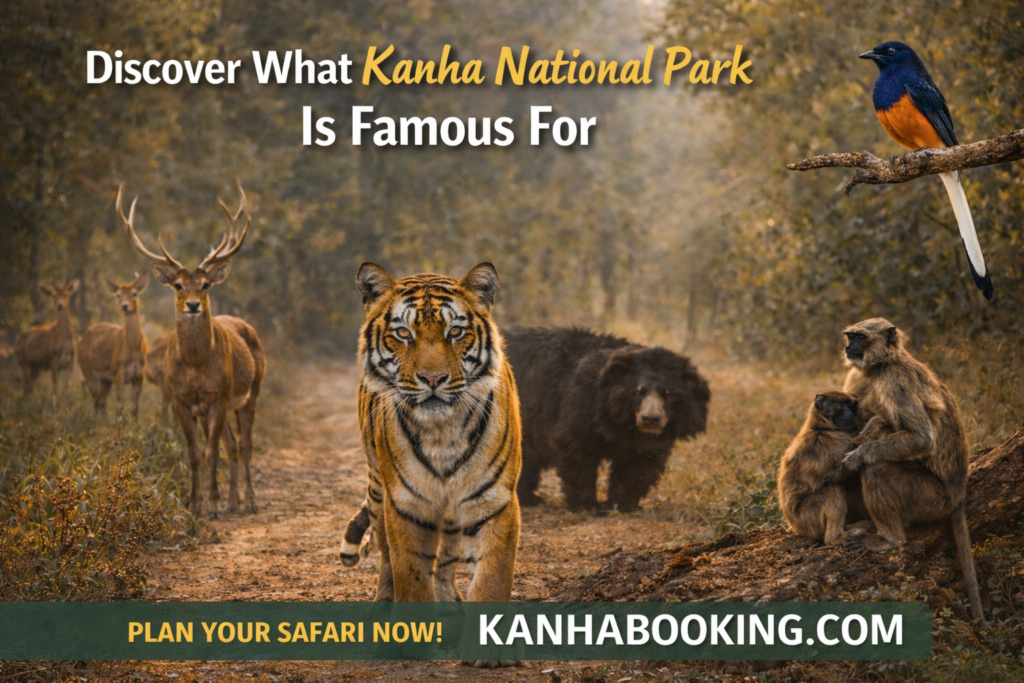
Kanha National Park is one of the most celebrated wildlife destinations in all of India. Tucked in the heart of Madhya Pradesh, this stunning tiger reserve has captured the imagination of nature lovers, wildlife photographers, and adventure seekers for decades. But what exactly makes Kanha so special? Let’s take a deep dive into everything that makes Kanha famous from its iconic Bengal tigers to its rich cultural heritage.
A Brief Introduction to Kanha National Park Is Famous For
Established in 1955 and declared a tiger reserve under Project Tiger in 1973, Kanha National Park holds a proud place in India’s conservation history. It spreads across 940 square kilometers of core zone, with an overall area of 1,949 sq km including the buffer zone. The park sits across the Mandla and Balaghat districts of Madhya Pradesh, Central India.
What makes Kanha truly special is its varied landscape: dense sal forests, open grassy meadows called maidan, bamboo groves, and sparkling rivers all come together to create one of the richest ecosystems in the country.
The Jungle Book Connection — Kipling’s Inspiration
One of the biggest reasons Kanha National Park is world-famous is its deep link to Rudyard Kipling’s beloved classic, The Jungle Book. This very jungle is widely believed to have inspired the world of Mowgli, Baloo, and Shere Khan. Walking through Kanha’s dense forests, it is easy to see where that imagination came from.
This connection alone draws thousands of literary enthusiasts and families from around the globe every year, making it a cultural landmark beyond just wildlife tourism.
Bengal Tiger — The Crown Jewel of Kanha
When people think of Kanha National Park, the Royal Bengal Tiger is the very first thing that comes to mind. Kanha is one of the best places in India to spot tigers in the wild. Thanks to decades of dedicated conservation under Project Tiger, the tiger population here has grown steadily.
The core zones especially Kanha Zone and Mukki Zone are considered the most rewarding areas for tiger sightings in Kanha National Park. Early morning jeep safaris offer the highest chances of a face-to-face encounter with this magnificent big cat as it moves through its natural territory.
For wildlife photographers and nature enthusiasts, a Kanha tiger safari is not just a tour — it is a life-changing experience.
Barasingha — The Pride of Kanha
If the Bengal tiger is the king of Kanha, the barasingha (hard-ground swamp deer) is its most treasured resident. Kanha National Park is the only place in the world where the hard-ground barasingha survives, and the park’s conservation success in bringing this species back from near-extinction is remarkable.
Once on the verge of disappearing forever, the barasingha population has made an incredible comeback thanks to dedicated wildlife protection and careful habitat management. Watching herds of barasingha graze across open meadows during a jungle safari is one of Kanha’s most unforgettable sights.
Rich Biodiversity Beyond Tigers
Kanha National Park is not just about tigers. The park is home to an extraordinary variety of wildlife that makes every safari unique:
- Mammals: Leopard, Indian wild dog (dhole), sloth bear, Indian bison (gaur), sambar deer, chital (spotted deer), barking deer, jackal, and the rare striped hyena.
- Birds: With over 300 species of birds, Kanha is a paradise for birdwatchers. Some of the most prized sightings include the Indian paradise flycatcher (State Bird of Madhya Pradesh), crested serpent eagle, Malabar pied hornbill, Indian roller, and racket-tailed drongo.
- Reptiles: Marsh crocodile, monitor lizard, python, and several species of snakes share this habitat.
This incredible biodiversity makes Kanha National Park wildlife one of the most diverse in all of Central India.
Kanha Safari Zones — Where the Magic Happens
Kanha Tiger Reserve is divided into multiple safari zones, each offering a distinct experience:
- Kanha Zone — Most popular, highest tiger sighting probability
- Mukki Zone — Excellent for big cat sightings and open meadows
- Kisli Zone — Historic zone, closest to Khatia gate
- Sarhi Zone — Quieter, great for birding and peaceful jungle drives
- Buffer Zones (Khatia, Khapa, Sijhora, Phen) — More relaxed rules, good for photography
You can book your Kanha safari online easily to secure your preferred zone and time slot in advance, especially important during peak season when permits sell out fast.
Things to Do in Kanha National Park
Beyond the core jeep safari, Kanha offers a rich range of activities:
- Jeep Safari (Gypsy Safari): The most popular way to explore the park. Morning (6–10 AM) and afternoon (3–6 PM) slots offer the best wildlife sightings.
- Bird Watching Tours: With 300+ bird species, early morning walks in and around the park are a treat for ornithology enthusiasts.
- Nature Walks and Forest Trails: Guided walks with trained naturalists help you spot animal pugmarks, identify bird calls, and discover medicinal plants.
- Tribal Village Tours: Explore the living culture of the Gond and Baiga tribes, the original residents of this land. Their traditions, art forms, and deep bond with the forest are truly fascinating.
- Kanha Museum and Interpretation Centre: Located near Khatia Gate, this free centre features displays on tiger conservation, animal skeletons, and tribal culture great for families and kids.
- Wildlife Photography: Kanha is considered one of the top wildlife photography destinations in Madhya Pradesh, with its golden morning light, open meadows, and diverse subjects.
- Cycling Trails: Explore the buffer zones on two wheels with local naturalists between October and March.
Best Time to Visit Kanha National Park
The park is generally open from October to June and closed during the monsoon months (July–September) for forest recovery.
- October to February — Cool weather, lush green forests, very active wildlife
- March to May — Dry season, animals gather near water sources, peak tiger sighting season
- June — Hot but excellent for sightings before closure
The best time to visit Kanha National Park for a tiger sighting is between March and May when the dry vegetation makes spotting easier. For birdwatching and a cooler, greener experience, October to December is ideal.
How to Reach Kanha National Park
Kanha has three main entry gates — Khatia (Kisli), Mukki, and Sarhi.
- By Air: Nearest airports are Jabalpur (170 km) and Nagpur (265 km)
- By Train: Jabalpur and Gondia are the closest railway stations
- By Road: Well-connected by state highways from Jabalpur, Nagpur, and Raipur
Where to Stay Near Kanha National Park
Accommodation options range from luxury jungle resorts to mid-range eco-lodges and budget guesthouses near park gates. Staying close to the Khatia or Mukki gates gives you quick access to early morning safaris.
You can browse and book Kanha hotels and resort packages through kanhabooking.com for confirmed stays combined with safari permits.
Frequently Asked Questions (FAQs)
Kanha is famous for Bengal tigers, the rare hard-ground barasingha, and being the inspiration for Rudyard Kipling’s The Jungle Book.
Tigers, leopards, dholes, sloth bears, gaur, barasingha, sambar, chital, jackals, and 300+ bird species.
Kanha Zone and Mukki Zone both have the highest tiger density and open terrain for easy spotting.
October to June. March–May for tiger sightings; October–February for cool weather and birdwatching.
No. It closes in July–September (monsoon). Core zones are fully suspended; buffer zones may partially operate.
Yes. With 300+ species, it’s excellent for birding. The best time is early morning.
Yes. Children under 5 usually share a seat with an adult. Check current park rules before booking.
Final Thoughts
Kanha National Park is not just a wildlife reserve, it is a living, breathing ecosystem that tells the story of India’s commitment to conservation. From the thrill of a tiger sighting at dawn to the quiet beauty of barasingha grazing in golden meadows, every moment here is unforgettable.
Whether you are a first-time visitor or a seasoned wildlife traveler, Kanha will always have something new to show you. Plan your trip, book your safari early, and get ready to experience one of India’s greatest natural treasures.