
There is something about Kanha in the last weeks before the monsoon that most people completely miss. The jungle gets quieter. The heat thins the forest canopy just enough. And the tigers? They come out in the open more than they do at any other time of year. If you have been putting off your Kanha National Park visit, this is the reason to stop waiting.
Kanha closes every year for the monsoon, and that window is closer than most people realize. Once the rains arrive, safaris stop, roads flood, and the entire reserve shuts down for wildlife recovery. So if you are searching for the best time to visit Kanha National Park for tiger sightings, the answer is right now — April through June, before the park closes.
Why Visiting Kanha Before Monsoon is Actually the Best Decision
Most people assume summer is the wrong time to travel. But for wildlife lovers, it is the opposite in Kanha.
As temperatures start to rise from April onwards, the water sources across the forest sorta begin to dry up. Animals have fewer places to drink, so they gather around the remaining waterholes and then the tigers follow their prey. That natural clumping of wildlife really makes the pre monsoon months a peak season for tiger sightings in Kanha. You are more likely to catch a Royal Bengal Tiger in April or May, then you are in December.
Yes, it gets warm. Mornings are manageable and that is exactly when your Kanha jungle safari happens — between 6 AM and 11 AM. By the time the midday heat sets in, you are back at your resort, resting before an evening safari. The discomfort is small. The reward is big.
When Does Kanha National Park Close for Monsoon?
Kanha National Park closes on June 30 every year for the monsoon season. The park reopens in mid-October, usually around October 15. From July through mid-October, no core zone safari is permitted. Roads inside the forest become waterlogged and unsafe, and the forest department uses this period to allow the ecosystem to recover and for wildlife to breed undisturbed.
If you are planning a trip and wondering whether Kanha is open in June — yes, it is open through June 30. That makes June the last month you can book a Kanha safari before the rains arrive and the gates close for four months.
What Makes a Pre-Monsoon Safari in Kanha Different
The forest in March to June has a raw, open quality to it. The sal trees shed some of their canopy and the grasslands — locally called maidans are dry and wide. Visibility is better. You can spot animals from a greater distance. The Kanha maidan, Sondar maidan, and the meadows near Mukki zone are particularly productive for wildlife sightings during this time.
Tigers are not the only draw. Sloth bears are frequently spotted foraging in the mornings. Indian wild dogs, called dholes, are active and often seen hunting deer in coordinated packs across the open meadows. The hard-ground barasingha — a deer species found in significant numbers only in Kanha — grazes peacefully in the maidans even as the heat builds. Gaur (Indian bison) gather near water too, making for unforgettable close encounters.
For wildlife photographers, pre-monsoon Kanha is a dream. The golden early light, the dry landscape, and the frequent large animal sightings create frames that monsoon or winter visitors simply cannot get.
Kanha Safari Zones — Which One Should You Choose?
Kanha has four core zones and several buffer zones. Each offers a different experience.
The Kanha Zone near Kisli gate is the most famous. It covers the iconic Kanha meadow and has consistently high tiger activity. The Mukki Zone on the southern end is larger and has dense forest, excellent leopard and dhole sightings, and is slightly less crowded. Sarhi Zone is smaller and quieter, good for those who want a more intimate experience. The Kisli Zone overlaps partially with the Kanha Zone.
Buffer zones like Khatia, Sijhora, Khapa, and Phen are open year-round including during monsoon months, though core zone tiger sightings are obviously not possible then. For pre-monsoon visits, always prioritize a core zone safari.
How to Book a Kanha Safari Online
The smartest move is to book online at least 15 to 30 days in advance. Kanha jungle safari booking makes this simple — you pick your zone, choose between morning or evening safari, select your date, and confirm your gypsy booking. You will need a valid government photo ID for all passengers. Children under 5 can share a seat with an adult.
Morning safaris run from 6 AM to 11 AM. Evening safaris go from 3 PM to 6 PM. For tiger sightings, morning sessions have the edge — big cats are most active in the cooler early hours.
What to Carry on a Kanha Safari in Summer
Travelling before the rains means planning for warmth and bright sun. Carry light cotton clothes in neutral or earthy tones (avoid bright colours in the forest). A good pair of sunglasses, a wide-brimmed hat, and a reusable water bottle are non-negotiable. Sunscreen with high SPF helps on open gypsy rides. A camera with a decent zoom lens will serve you far better than a phone for wildlife shots at distance.
The gypsy is an open vehicle, so you get full wind and dust on the trail. A light scarf or bandana around the neck is useful. Binoculars are strongly recommended — Kanha’s maidans stretch wide and animals can be spotted at a distance before they are close enough to photograph.
How to Reach Kanha National Park
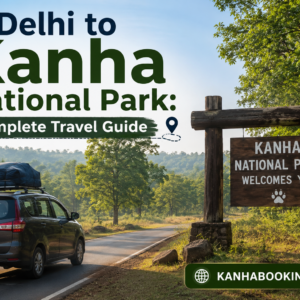
The airports closest to Kanha are Jabalpur ( roughly 130 km) and Nagpur (about 265 km ) and both places are usually easy to reach by air from major Indian cities. If you’re thinking by rail, the nearest railway stations are Jabalpur and Gondia, these two spots have trains connecting to Delhi, Mumbai, and also Nagpur. From either of those cities you can just hire a cab, or ask your resort to arrange local transfer / car,or let your tour operator handle the ride so you can get to the park gates comfortably.
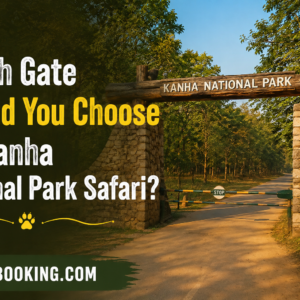
The entry gates most visitors use are Khatia (for Kisli and Kanha Zone) and Mukki Gate for the southern zones.
FAQs
Kanha closes on June 30 every year and reopens around October 15.
Yes, Kanha is fully open through June 30 — these are actually the best months for tiger sightings.
Kanha Zone and Mukki Zone are consistently the best for tiger sightings, especially before the monsoon.
At least 15 to 30 days ahead is recommended. Peak pre-monsoon slots fill quickly.
The core zones are closed July to mid-October. Only buffer zones may be accessible, but tiger sightings are unlikely.
A valid original government photo ID (Aadhaar, passport, voter ID, or driving licence) matching your booking details.
Morning safaris (6–11 AM) are comfortable. The heat peaks midday, well after your safari ends.
Conclusion
Kanha National Park before the monsoon is underrated, and honestly, that works in your favour. Fewer crowds. More animals at the waterholes. Better tiger sightings than almost any other time of year. The park is open, the forest is alive, and the safaris are running but not for much longer. June 30 is the last date before everything closes for four months.