If you are planning a trip to Kanha Tiger Reserve and wondering how to choose the right zone for your safari, you are not alone. This is one of the most common questions among first-time and even repeat visitors. Kanha National Park is large, beautifully diverse, and divided into multiple zones — each with its own character, wildlife density, and experience.
Total Number of Safari Zones in Kanha National Park
There are a total of 8 safari zones in Kanha National Park. These are split into two categories — core zones and buffer zones.
The 4 core zones are: Kanha, Kisli, Mukki, and Sarhi .
The 4 buffer zones are: Khatia, Khapa, Sijhora, and Phen ( inside Phen Wildlife Sanctuary ) .
Each zone has its own entry gate, scenery, wildlife density, and kind of experience. Like if you are a first timer chasing a tiger sighting or more like a birdwatcher trying for something quieter, then honestly there is always a zone for you, depending on what you seek.
The 4 Core Zones of Kanha National Park — Explained Simply
Core zones are the heart of the jungle. These areas are strictly regulated, have limited daily vehicle permits, and offer the best chances of spotting big cats and rare wildlife. Safaris in core zones run twice a day — in the morning and in the evening.
1. Kanha Zone
This is probably the most popular and most visited zone in the entire tiger reserve. It sits in the central part of the park and basically has large open meadow areas called maidans , plus bamboo groves and grasslands too, that together make the perfect conditions for wildlife to be spotted easier. The famous Shravan Taal water body lies inside this zone, and people believe it has some historical significance as well. Kanha zone gives you some of the highest tiger sighting chances in the entire park. It is also the zone where you find the park’s main museum and interpretation centre.
If you want a classic Kanha safari experience with good tiger probability and open landscapes, start here.
2. Kisli Zone
Kisli zone is located in the western part of the reserve and shares its entry point with Kanha zone through the Khatia gate. The terrain is different from the Kanha zone — dominated by tall sal forests, scenic grasslands, and bamboo vegetation. Leopard sightings are reported here more regularly than in other zones. The zone is slightly less crowded than the Kanha zone, which many visitors prefer for a quieter forest drive.
First-time visitors who book through Khatia gate often end up doing a mix of Kanha and Kisli zones.
3. Mukki Zone
Mukki zone sits in the southern part of Kanha Tiger Reserve and is accessed through the Mukki gate. Ask any wildlife guide or regular visitor which zone gives the best tiger sightings and most of them will say Mukki. The zone has the highest density of tigers according to tiger sighting records and is also known as the best spot in Kanha to see the hard-ground barasingha, which is a deer species found almost nowhere else in the world.
The landscape here is rich with sal forest, bamboo, large water bodies, and open grasslands that support a thriving prey base — which is why tigers are frequently seen here. Over 300 bird species have been recorded in this zone, making it a favourite for birdwatchers too.
One important thing to know — the Mukki zone is about two hours away from the Khatia zone by road. Do not book a resort near Khatia gate and expect to do a Mukki zone safari easily.
4. Sarhi Zone
Sarhi is the least visited among the four core zones but that does not make it less special. Located on the western edge of the reserve, Sarhi is known for its wide dry deciduous forest, larger meadows, and peaceful safari experience. The famous Saunf meadow lies within Sarhi zone — this is the very spot where the barasingha was first officially sighted in 1966 during conservation efforts to save the species from extinction.
Sarhi is an excellent choice for birdwatching and for those who want a quieter, less commercial safari experience without large crowds.
The 4 Buffer Zones of Kanha National Park
Buffer zones form the outer ring of the tiger reserve and act as a natural bridge between the core forest and surrounding human settlements. Safari rules here are more relaxed, permit availability is higher, and the experience tends to be less rushed.
Khatia Zone — Located near the Khatia entrance gate, this is a good option for visitors who missed booking a core zone slot or want an accessible walk-in safari on shorter notice.
Khapa Zone — Located adjacent to the Mukki core zone in the southwest, Khapa is known for its scenic water bodies and marshy landscape. Birdwatchers especially love this zone.
Sijhora Zone — A quieter buffer zone option for visitors on the Mukki side of the park.
Phen Zone — This is located inside the adjacent Phen Wildlife Sanctuary, which forms part of the larger Kanha Tiger Reserve. It offers a slightly different forest feel compared to the main zones.
Buffer zone safaris are also open for night safari in Kanha, which runs from 7 PM to 10 PM. This is a unique experience not available in core zones.
Entry Gates of Kanha National Park
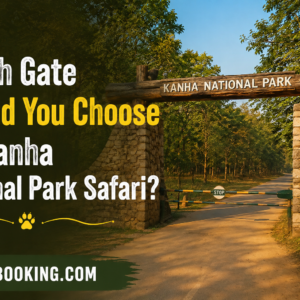
There are 3 main entry gates to access Kanha National Park:
- Khatia Gate — This gate gives access to the Kanha and Kisli core zones. Most resorts and tourist infrastructure on the western side are located near this gate.
- Mukki Gate — This gate provides access to the Mukki core zone. It is located on the southern side of the park, roughly 54 kilometres from Khatia gate.
- Sarhi Gate — This gate gives access to the Sarhi core zone on the western edge.
A very important tip — zones are far apart from each other. Travelling between Khatia and Mukki takes approximately two hours by road. Plan your stay location and zone selection together to avoid unnecessary travel.
Which Zone Should You Choose?
Here is a simple guide based on what you are looking for:
- For the best tiger sighting chances — book Kanha zone or Mukki zone.
- For barasingha sightings — Mukki zone is your best bet.
- For first-time visitors — Kanha or Kisli zone is ideal since both are accessible from the same Khatia gate.
- For birdwatching — Sarhi zone or Mukki zone, and Khapa buffer zone for a quieter experience.
- For a crowd-free safari — Sarhi zone or any of the buffer zones.
Kanha Safari Booking Tips
Book your safari slot well in advance — popular core zones like Kanha and Mukki sell out months ahead during peak season.
The park is open from October to June. It stays closed during the monsoon months from July to mid-October to allow the forest to recover.
Morning safari timings are 6:00 AM to 11:00 AM. Evening safari runs from 3:00 PM to 6:00 PM.
Each jeep (gypsy) accommodates a maximum of 6 passengers along with a guide and driver.
You need to carry your original photo ID matching the booking details at the entry gate. No original ID means no entry.
If you want to book a Kanha safari online with zone selection, permit assistance, and travel planning, you can easily complete the process in advance for a smooth and hassle-free wildlife experience.
FAQs
There are 8 zones in total — 4 core zones (Kanha, Kisli, Mukki, Sarhi) and 4 buffer zones (Khatia, Khapa, Sijhora, Phen).
Mukki and Kanha zones have the highest tiger sighting probability based on historical records.
There are 3 main entry gates — Khatia, Mukki, and Sarhi gate.
No. Zones are far apart from each other. Mukki and Khatia gate are about 2 hours apart by road. Plan your zone choice based on where you are staying.
Sarhi zone and Mukki zone are considered the top choices for birdwatching, with over 300 bird species recorded in Mukki alone.
Carry the original government-issued photo ID (Aadhaar, Driving Licence, Voter ID, or Passport) that was used during the booking process.
Conclusion
Kanha National Park is not just one jungle, it is like a collection of separate zones, each with its own kind of vibe. There are 4 core zones and also 4 buffer zones spread over this huge reserve so every safari you take can feel kinda different from the last one. Whether it’s your first chance for a tiger sighting , or you come back for the tenth time, getting how the zone system works is what really makes a safari good, and then turns it into something great.
Pick your zone by what really pulls at you most, like big cat sightings , rare deer, birdwatching , or just the quiet comfort of a slow forest drive. Try to arrange your stay near the zone you like , book well ahead of time, carry your ID, and keep a flexible, open mind. The forest always has something in store.