
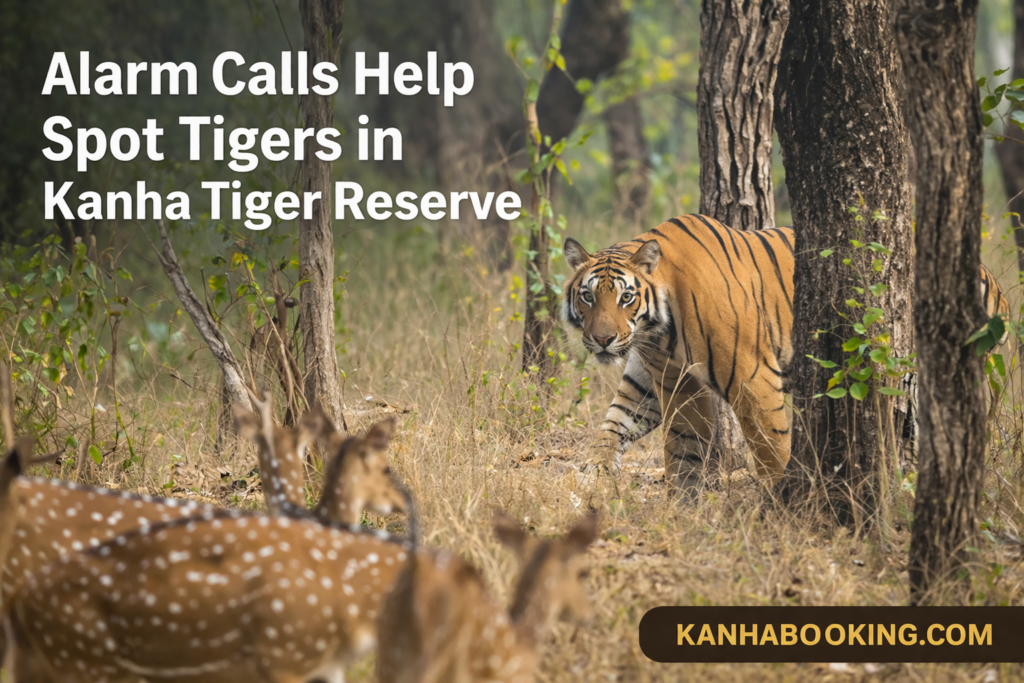
Introduction
Spotting a Bengal tiger in the wild is one of the most thrilling experiences a traveler can have. But tigers are very good at hiding and blending into their surroundings. They move silently through dense forests and tall grass. So how do expert guides and naturalists find them?
The secret lies in animal alarm calls — nature’s own warning system.
In Kanha National Park, listening to the jungle is just as important as looking into it. When a tiger moves through the forest, the animals around it react. Their alarm calls work like a live signal, pointing exactly where the predator is. Knowing how to read these sounds can completely change your Kanha safari experience.
What Are Alarm Calls?
Alarm calls are warning sounds made by animals when they sense danger nearby, usually a predator like a tiger or leopard. These calls travel fast through the forest and alert other animals in the area.
For wildlife guides, these sounds are like reading a map. They reveal:
- The presence of a predator
- The direction it is moving
- The level of danger (near or far)
In Kanha National Park, where the forest is thick and visibility is limited, alarm calls are often the first and most reliable sign that a tiger is close.
Animals That Give Alarm Calls in Kanha
1. Spotted Deer (Chital)
The chital is the most common alarm caller in Kanha National Park. When it detects a tiger, it lets out a sharp, loud bark repeated several times. Experienced naturalists say if chital are barking continuously and moving in one direction — a tiger is likely following.
2. Sambar Deer
Sambar gives a loud, deep “dhank” sound when they spot a big cat. This single powerful bark travels far through the forest. Sambar calls are considered one of the most reliable alarm signals for tiger presence in Kanha.
3. Langur Monkeys
Langurs sit high in trees and have a wide field of vision. When they spot a tiger below, they let out a series of harsh whooping calls. Since they watch from above, langur alarm calls can indicate a tiger even before ground animals sense it.
4. Indian Peafowl (Peacock)
Peacocks produce a loud, shrieking call when alarmed. In Kanha’s open meadows and grasslands, this call often signals movement of a large predator nearby.
5. Jungle Fowl
Jungle fowl make sharp clucking sounds when disturbed. Though smaller in range, their calls are useful when deeper inside the forest zone.
How Guides Use Alarm Calls During Kanha Safari
Trained wildlife guides and naturalists in Kanha National Park are experts at reading the jungle. During a jeep safari in Kanha, your guide will:
- Stop the vehicle the moment they hear an alarm call
- Identify the animal making the sound (chital, sambar, or langur)
- Track the direction of the calls to estimate tiger movement
- Position the jeep at the right spot to increase chances of a sighting
This is why hiring an experienced safari guide in Kanha is so important. They do not just drive — they listen, interpret, and navigate based on what the forest is saying.
Why Kanha Tiger Reserve Is Ideal for Alarm Call Tracking
Kanha National Park is spread across 940 square kilometers of sal forests, bamboo groves, and open grasslands. This variety of habitat makes it one of India’s best places for wildlife sighting and tiger tracking.
A few reasons why Kanha is perfect for this experience:
- High chital population: Kanha has one of the densest chital populations in India, which means more alarm callers and more chances to track tigers.
- Open meadows: The famous meadows (maidans) in Kanha allow sound to travel clearly, making alarm calls easier to detect.
- Rich tiger territory: Kanha has a strong Bengal tiger population, meaning tiger movement through prey territory is regular.
- Well-trained guides: Naturalists here are trained to decode jungle sounds as part of their expertise.
Morning vs Evening Safari — Which Is Better for Alarm Calls?
Both safari timings have their advantages, but for alarm call tracking:
Morning Safari
- The forest is quieter in the early morning, making alarm calls easier to hear.
- Tigers are often on the move after a night of hunting.
- Langurs and peacocks are very active at this time.
Evening Safari
- As the temperature drops, animals become active again.
- Chital and sambar move out into open areas, and alarm calls become frequent.
- Light is good for photography.
Both timings are productive. If possible, book both morning and evening safaris for the best experience.
Tips to Make the Most of Alarm Calls on Your Kanha Safari
- Stay silent in the jungle. Unnecessary noise will suppress animal activity.
- Listen more than you look. Your ears will find the tiger before your eyes do.
- Trust your guide. Let them interpret the sounds. Do not rush or ask to move immediately.
- Carry binoculars. Once an alarm call is heard, you will need to scan the area quickly.
- Be patient. Nature rewards those who wait.
Conclusion
The jungle has its own language and once you learn to listen, everything changes.
In Kanha Tiger Reserve, animal alarm calls are not just sounds. They are real-time signals from nature, guiding you straight to one of the world’s most powerful predators, the Bengal tiger. Whether it is the sharp bark of a chital, the deep call of a sambar, or the whooping of a langur from the treetops, every sound in the forest tells a story.
With a skilled guide by your side, the right safari zone, and a little patience, your Kanha jeep safari can go from an ordinary jungle drive to an unforgettable tiger encounter — guided not by luck, but by the voice of the jungle itself.
So on your next visit to Kanha National Park, sit back, stay quiet, and listen. The forest will do the rest.
FAQs — Alarm Calls and Tiger Spotting in Kanha
Alarm calls are warning sounds made by animals like deer, monkeys, and peacocks when they sense a predator. In Kanha National Park, these calls help guides locate tigers in the dense forest.
Sambar deer and chital (spotted deer) give the most reliable alarm calls for tiger presence. Langur monkey calls from treetops are also very helpful, especially in forested areas.
Yes. Experienced guides in Kanha Tiger Reserve are trained to track tigers using alarm calls. They listen for the direction and intensity of the calls and position the jeep accordingly.
Morning safari is slightly better as the forest is quieter and animals are more active. However, evening safaris are equally productive, especially in open meadow zones.
Yes. All certified naturalist guides in Kanha National Park are trained in wildlife behavior, including identifying and interpreting alarm calls from different species.